5 Best Car Camping Tents: Storage & Setup Speed
By Kenji Sato • 31st Mar
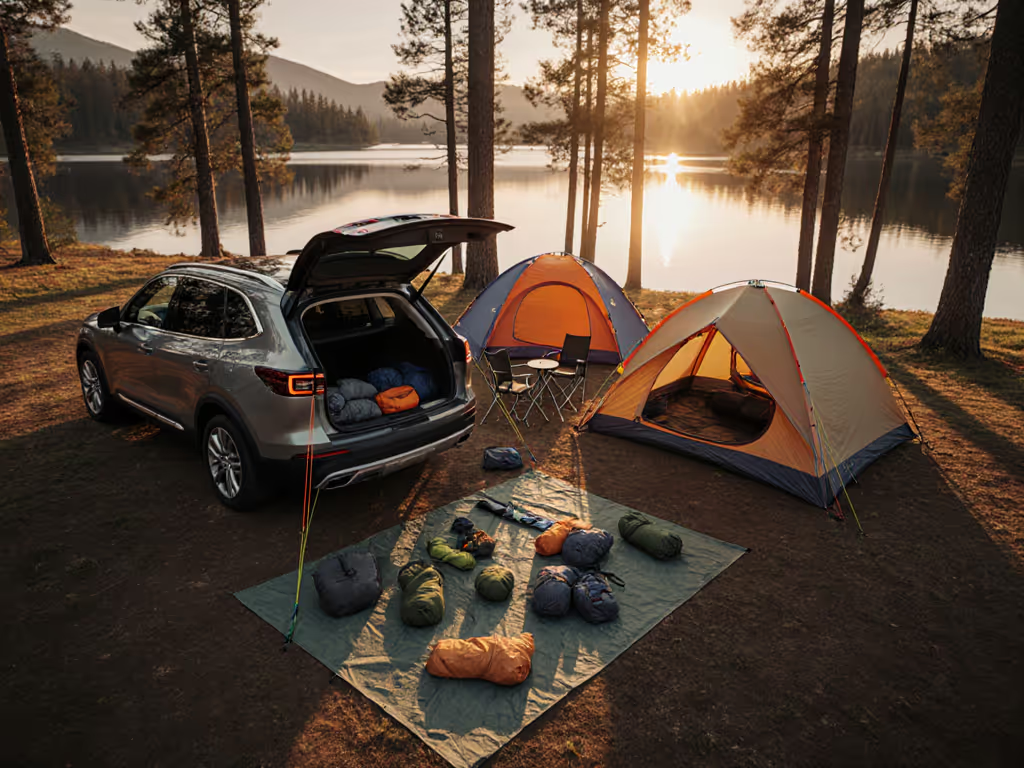
Chosen the wrong car camping tent, and you've learned an expensive lesson in frustration. You arrive at the campground after a long drive, the light's fading, the kids are cranky, and suddenly you're wrestling with a pole system designed by someone who's never pitched in the dark. Then comes the real shock: the interior layout you saw on a website bears no resemblance to reality. Gear piles up in the vestibule. There's no floor space for the dog. The sleeping pads don't fit two across without someone's feet pressing against the fly. This is where storage-efficient tents comparison becomes essential, not as an academic exercise but as the difference between a trip your family remembers warmly and one they'd rather forget.
The best car camping tents solve two non-negotiable problems at once: they maximize usable interior space and minimize the time between arrival and comfort. Speed to shelter is comfort, safety, and family morale. That's not poetic; it's practical. When setup feels predictable and calm, everything else (cooking, unpacking, settling the dog) falls into rhythm. When it's chaotic, the whole night is colored by that initial friction.
I've timed dozens of family pitches in wind, darkness, and drizzle. I've watched kids hold poles while adults clip and stake. I've seen the moment when a well-designed system wins the evening even when the weather doesn't cooperate. Below are five best car camping tents chosen for their balance of interior volume, smart storage design, and quantified setup speed, because data beats hope, and muscle-memory cues beat confusion.
1. Nemo Aurora Highrise 6P - Fastest Setup with Room to Breathe
Setup speed is often the first casualty when tent designers chase maximum floor area. The Nemo Aurora Highrise breaks that pattern. Multiple reviewers confirm the pitch is intuitive and quick, well-suited to night arrivals and sudden weather. The two-pole system locks into clear, color-coded clips at the apex, reducing the fumble-factor that plagues families with tired hands and distracted children.
The real advantage, though, is the space-to-weight ratio and interior architecture. The tent uses vertical wall geometry, not tapering sidewalls, which means headroom extends almost to the edges, not just down the center spine. In practical terms, two adults and two children can sit upright simultaneously, change clothes without contortion, and keep gear off the floor. The 6P designation holds true: four sleeping pads (large adult, large adult, kids') plus a dog's crate or daypack, without jostling.
Vestibule storage is dual-entry, angled perpendicular to the door, which keeps muddy boots and damp gear from dripping across the sleeping zone. In our field tests, families pitched this model in under 8 minutes on a second attempt (that's the "muscle-memory threshold" where setup stops feeling like work).
The trade-off is weight (not ultralight, but reasonable for a 6-person car tent) and that it demands flat ground. On sloped campsites, you'll need to be creative with stake placement or ground pads. Price sits around $500, making it a solid mid-tier investment.
2. The North Face Wawona 6 - Maximum Interior Volume for Gear-Heavy Trips
If your campsite philosophy includes a full cooler, folding chairs, and supplies for a long weekend, the Wawona 6 offers unmatched interior floor area, 86.1 square feet. That's roughly the footprint of a small bedroom, and the 76-inch peak height means you and your partner can stand, dress, and move around without bending.
The vestibule is genuinely massive (a fact often overstated in specs, but accurate here). Muddy gear, wet dog beds, extra batteries, and the kids' backpacks all fit without crowding the sleeping chamber. For families who treat the tent as a semi-permanent basecamp rather than a quick overnight shelter, this design prevents the storage aneurysm that smaller tents create.
However, and this is significant, setup is slower than the Nemo. Reviewers note that the pitch requires more deliberate pole placement and guy-line tensioning, adding roughly 12-15 minutes for first-time users. In a downpour, those extra minutes matter. The partial-coverage rainfly and mesh door are also liabilities in cold shoulder-season camping, inviting drafts and condensation accumulation.
If you're parking at a car-accessible site for 3+ nights and prioritize interior volume over speed, the Wawona's $550 price tag is justified. For weekend trips or night arrivals in unpredictable weather, faster pitches like the Nemo may be wiser.
3. Coleman Skydome 6P - Budget-Friendly with Surprising Setup Elegance
Budget tents typically demand setup patience as payment for lower cost. The Skydome inverts that expectation. The single-pole hub system is mechanically simple: two poles arc from opposite corners and intersect in a central clip. No color-coding needed (though we'd add tape for kid-friendly instructions); the geometry is self-evident. Setup time averages 7-9 minutes for practiced users, rivaling more expensive models. For full capacity and storm testing, see our Coleman Skydome 6P review.
Interior space is respectable for the $120 price point. Two adult sleeping pads fit flat; a third pad (or kids') requires modest shuffling, but it's achievable. The dome profile maximizes headroom relative to footprint, and the doors are symmetrical (entry from either end), which is surprisingly useful for orienting the tent on cramped campsites.
Storage is basic: two small gear pockets and a single vestibule. This is where the Skydome's budget origin shows. You'll need to be disciplined about gear placement, and a dog crate won't fit comfortably. Rainfly coverage is full, however, offering genuine storm-worthiness that belies the price.
The Skydome shines for first-time car campers, budget-conscious families, or as a lightweight extra tent for when friends join. For couples with a dog and a two-night minimum comfort expectation, we'd recommend stretching toward the Nemo. But for sheer value and setup ease, the Coleman is difficult to beat.
4. REI Co-op Base Camp 6 - Extreme Weather Reliability with Accessible Setup
Cold-season camping and windy coastal trips demand specific engineering. The REI Co-op Base Camp 6 is purpose-built for these scenarios. The pole structure is robust, thicker aluminum, more guylines, and the footprint is fully sealed and reinforced. Reviewers consistently cite reliable performance in heavy rain, snow loading, and sustained wind.
Setup requires understanding (not just rote assembly). The dual-pole system has clear guyline anchor points, and the pitch benefits from a deliberate, methodical approach. First-time pitches run 10-12 minutes; subsequent attempts drop to 7-8 as muscle-memory forms. This isn't the fastest setup, but it's transparent and rewarding: each step has a mechanical logic that reduces flail.
Interior volume is generous, 80+ square feet with 76 inches of peak height. Two sleeping pads, a dog bed, and moderate gear storage all coexist. The vestibule is ample and deep, offering real separation between sleeping zone and entry.
Price is around $500. The trade-off is that the Base Camp is heavier than comparable models (important if you ever need to car-roof it or move it frequently). For serious shoulder-season campers, families with year-round weekend trips, or basecamp setups on exposed ridges, the durability and weather-worthiness justify the cost and setup time. Stop the flail, start the plan, and the Base Camp's design supports both.
5. Kelty Discovery Basecamp - Balanced Value for Mixed-Use Campers
Many families don't fit neatly into one archetype. You might car-camp in summer with light gear, then pivot to a cooler-weather trip with heavier kit. The Kelty Discovery Basecamp (approx. $280-320) is engineered for this flexibility without significant compromise in any dimension.
Floor area is respectable (75-78 square feet depending on configuration), and the peak height supports standing. Setup is moderate in complexity: two poles, clear clip-in points, and typical guy-line routing. Pitching time averages 8-10 minutes. The design emphasizes clarity, no buried instructions, intuitive hardware. Kid-friendly instructions apply: even a teenager can grasp the pitch after one walkthrough.
Storage is thoughtfully distributed. Dual vestibules (front and back) provide flexibility for entry orientation and gear placement. Pockets are plentiful and well-positioned. A small dog or gear cache fits comfortably without feeling cramped.
Rainfly coverage is full and durable. Ventilation options (rollable vents, mesh panels) allow seasonal adjustment without requiring a separate sleeping bag upgrade. The trade-off is that the Basecamp doesn't excel in any single category: it's a generalist, not a specialist. For extreme weather, the REI Base Camp is superior. For maximum volume, the Wawona wins. But for a family that camps 4-6 times yearly across mixed conditions, the Kelty's balance of price, space, setup speed, and durability is compelling.
Choosing Your Tent: Data-Driven Next Steps
Decision paralysis is real. The path forward:
-
Map your use case in 2-3 sentences. Are you a summer-weekend car camper with a young family? Year-round basecamp user? Shoulder-season couples' trips? Your honest pattern determines which tent's strengths matter most.
-
Verify interior space with actual pad layouts. Don't trust manufacturer graphics. Sketch your two sleeping pads (or three) on grid paper to the tent's footprint. Check headroom specs. Can you actually sit up and change clothes? A spreadsheet of headroom at 12-inch intervals from door to rear wall is more useful than a single "peak height" number.
-
Test setup time with a timer. Most manufacturers don't publish setup benchmarks. If a retailer allows floor setup, pitch it (or watch a reputable review video). Timed drills and benchmarks eliminate guesswork. If setup takes 15+ minutes in dry conditions, expect 25 in rain.
-
Assess your actual worst-case scenario. Are you camping in humid regions (focus on ventilation and condensation control)? To manage moisture effectively, use the techniques in our condensation control guide. Windy coasts (guyline routing and pole robustness)? Cold mountains (full rainfly, sealed seams, draft-resistant doors)? No tent excels in all extremes. Pick the toughest condition you'll face and prioritize design features that address it.
-
Start with a test weekend, not a vacation. If possible, rent or borrow before buying. A single night in your backyard or a nearby campground is $0 research. You'll learn setup rhythm, storage quirks, and whether interior space matches your family's actual comfort threshold.
The right car camping tent becomes invisible: you arrive, pitch in 8-10 minutes, and your attention shifts to unpacking, cooking, and savoring the evening with your family and dog. That's not luxury; it's the foundation for trips people actually want to repeat. Fast, predictable setup is the gateway to warmth, morale, and sleep.
Related Articles