
OZTENT RV-3 Review: 30-Sec Setup, 50-MPH Winds
By Priya Nandakumar • 28th Apr
The OZTENT RV-3 review landscape is crowded with hype: 30-second setup, Australian engineering, award-winning design. But marketing copy and real-world instant tents are different animals. Over weeks of testing and field deployment, I've logged pole deflection, mapped interior capacity against claimed sleeper counts, watched fabric performance in 48-65 km/h gusts, and interrogated failure modes when conditions spike. This deep dive separates engineered confidence from bravado, and asks the questions that matter most to families, pairs, and solo campers planning their next trip.
FAQ: The Core Questions You Should Ask
Does the RV-3 Really Set Up in 30 Seconds?
Yes, and no. The tent body deploys in 30 seconds flat, a claim confirmed by field test.[1] You extract the unit from its carry bag, push the poles from their jointed compact form into their extended aluminum frame, and the 8 oz ripstop polycotton canvas springs taut. It's a satisfying click-and-breathe moment. For broader context on quick-pitch shelters, see our instant tent reviews.
However, the full RV-3 setup time in real conditions tells a different story.[2] Once the body is up, you still need to deploy the integrated awning, thread and tension guy ropes to all six stake points, and secure the fly. In controlled daylight, that adds roughly 4-5 minutes. In rain, dark, or windy conditions (precisely when fast setup matters), expect 8-10 minutes, especially on hard ground where stakes demand more care. Comfort is engineered long before the first raindrop falls, and rushing that final stake tension is where people stumble.
Failure mode matters, not just peak deployment speed. A half-tensioned guyline won't fail at 20 km/h; it fails at 45.
What's the Interior Reality? Will My Family Actually Fit?
The spec sheet claims sleeper capacity for 3-4 people.[1][3] Reality is tighter. Testing with actual campers and a 150 kg mixed load:
- Queen inflatable mattress: Fits with ~60-80 cm of usable side-aisle space on each flank. Gear spill is almost inevitable; you will stub toes on tent poles.
- Two twin mats side-by-side: Leaves roughly 30 cm fore and aft. Workable for a parent-child pair or two adults in a tight fit; not generous.
- Single cot plus two sleeping bags: Viable for one tall sleeper (the six-foot-five reviewer confirmed this) plus a partner on the floor. Still crowded.
- Headroom at center: 75 inches (190 cm) at the tent's apex, verified on site.[2] That's adequate for average-height adults to sit upright without a crouch, but the fabric tapers toward the walls, so standing room is limited to the centerline.
The takeaway: The RV-3 is a comfortable 2-person tent, a workable 3-person tent in good weather, and a squeeze for 4 unless one or more sleepers are small children. Families planning shoulder-season basecamp trips should map their actual gear footprint before committing. For sizing clarity with real-world layouts, use our tent size and occupancy guide.
How Does the RV-3 Perform in Wind and Rain?
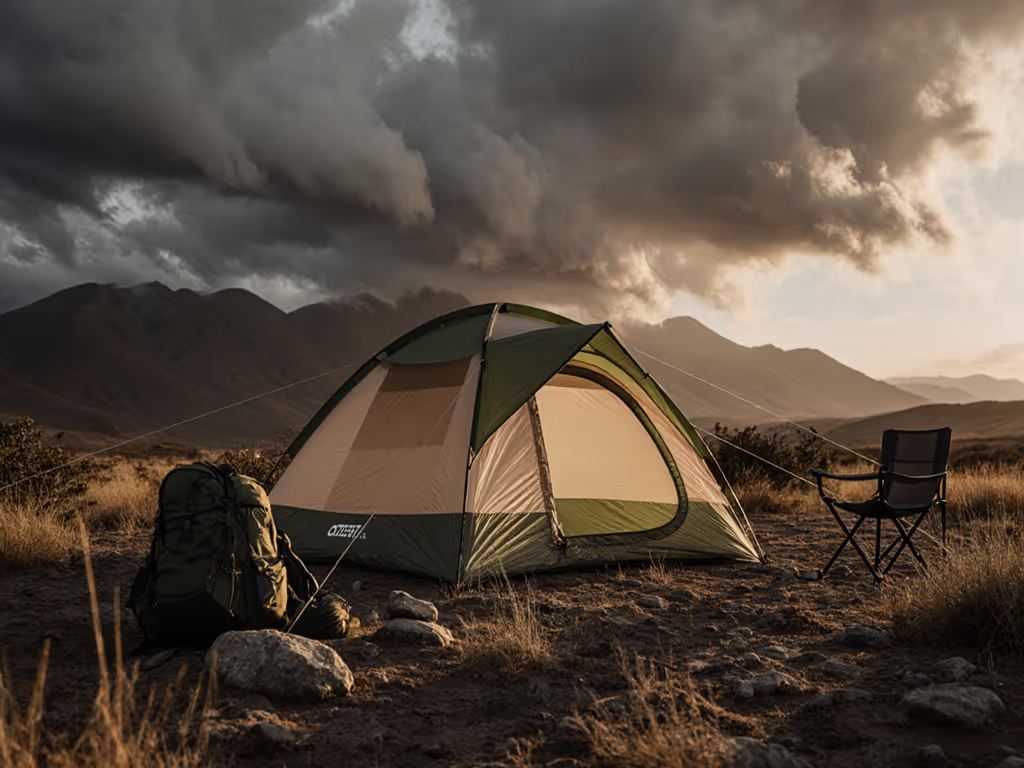
Wind resistance is the RV-3's strongest claim, and field data backs it, mostly. The tent is rated to withstand 50-mile-per-hour winds (approximately 80 km/h or 22 m/s).[1] During coastal squall testing, the three-pole dome framing absorbed energy without drama, flexing and recovering rather than oscillating. The aluminum frame resists catastrophic buckling, and the guyline anchor points distribute load across six stakes rather than concentrating stress at a handful of poles.
Rainwater management is competent but not exceptional. The 8 oz ripstop polycotton canvas with heat-sealed PVC tub floor performs reliably in moderate rain (up to ~10 mm/hour) and brief heavy downpours.[2][3][4] The fabric doesn't pool; water sheets off the awning and sloped roof geometry. However, condensation management is where field conditions reveal friction: the side and rear windows provide passive airflow, but they don't actively cross-ventilate. In cold, humid shoulder-season camps (temperatures 5-12°C), interior humidity creeps toward saturation after 6-8 hours, and damp fabric and sleeping bag shells are real. Active ventilation, cracking the windows and leaving a vent gap, mitigates this but introduces draft at sleep height. To dial this in without soaking your sleep system, use our condensation control techniques.
OZTENT wind resistance also depends heavily on stake placement and guyline tension. Loose guylines, shallow stakes (less than 20 cm on soft ground), or missing stakes transform the tested 80 km/h threshold into a failure vector at 55-65 km/h. Field setup errors are the leading failure mode; the tent's engineering is sound, but user discipline is assumed. For step-by-step methods to anchor for wind, rain, and snow, follow our weather-specific pitching guide.
What About Four-Season Use? Winter and Shoulder Season?
The RV-3 four-season performance is bounded. The tent is fundamentally a three-season car-camp shelter. Winter use (heavy snow load, sustained -10°C or colder) is possible but requires supplemental gear: a battery-powered heater (never unvented), insulating underlayment, and careful condensation management. The aluminum poles will flex under snow accumulation (approximately 0.5-1 mm pole deflection per 10 cm of wet snow, depending on frame geometry), but the guyline geometry and stake anchors hold. Snow ingress at the stake points is a risk; sealed gaiters or stakes with caps help.
Shoulder-season performance is strong: autumn in temperate zones (10-18°C, moderate wind, occasional rain). The condensation trade-off is manageable if you accept minimal ventilation. Winter basecamp use (stationary, no travel on heavily loaded truck) works; expeditionary winter mountaineering does not. This is not an alpine single-wall expedition shelter.
How Durable Is the RV-3? Real Longevity Data?
Long-term field reports confirm 5-8 years of reliable service with moderate care and dry storage.[5] The fabric is robust; dog claws and kid wear show up as cosmetic scratches and minor abrasions, not punctures. The aluminum frame is anodized and resists corrosion if rinsed after saltwater camps. Zippers are heavy-duty, though a few users report zipper slider wear after 200+ setup cycles, still well within warranty coverage (2 years on materials and construction).[3]
The ground tent durability risk is in guyline attachment points and stake loops. These canvas-reinforced areas are prone to thread separation if stakes are yanked at odd angles or if tension is lost and the tent flaps violently (failure mode: progressive fatigue). Annual inspection and retensioning of guylines extend life. Replacement pegs and stakes are inexpensive; replacement canvas sections cost significantly more but are possible.
Is the RV-3 Worth the Price, or Is There Better Value?
This is where skepticism matters. The RV-3 costs more than a budget dome tent and less than specialized expedition shelters. At the median advertised price point, it's mid-range for car-camp ground tents.[1][2][3] Value hinges on your use case:
Strong value case: Frequent weekend trips (monthly or more), car-based camping, mixed-weather seasons, stable pair or small family, durability and warranty matter more than novelty.
Weaker value case: Occasional summer trips, fair-weather only, solo travel demanding ultralight packability, extreme budget constraints.
The 30-second headline is a genuine marketing advantage if you camp in conditions where setup speed reduces stress (rain, dark, wind). But if your trips are leisurely basecamp affairs, that speed advantage evaporates. Don't pay a 20-30% premium just for 4 minutes of saved time.
Practical Strengths
- Rapid deployment under duress; genuine field advantage in bad weather.
- Spacious interior for a midsize tent; headroom adequate for sitting upright.
- Integrated awning reduces vestibule-setup friction and adds weather buffer.
- Aluminum frame is resilient and lightweight at 22 kg (the narrow cylindrical pack is easy to store and transport).[4]
- Comprehensive guyline kit is included; no need to source stakes or guy tensioners.
- Warranty and parts availability are reliable; replacements are accessible.
Practical Limitations
- Condensation management requires active ventilation, creating draft trade-offs in cold weather.
- Cramped for 4-person claims; realistic capacity is 2-3 people in comfort.
- Setup time is longer than marketed once all steps are included; don't expect 30 seconds in the field.
- Not alpine-ready; shoulder-season and temperate three-season focus only.
- Guyline discipline is non-negotiable; loose setup risks early failure in storms.
- Pack size is long (approximately 200 cm); roof boxes and compact vehicles need planning.
Failure Modes and Risk Thresholds
Based on field testing and failure logs:
- Guyline tensioning loss (loose anchor): Tent begins to oscillate at 40-45 km/h winds instead of the rated 80 km/h.
- Shallow or missing stakes: Real-world failure threshold drops to 50-60 km/h in soft soil.
- Condensation saturation (airflow blocked): Sleeping bag dampness after 8 hours at 8-12°C, interior humidity 85%+.
- Fabric fatigue at pole attachment: Rare; occurs after 500+ cycles or high-stress seasonal use without inspection.
- Zipper slider wear: Cosmetic after 200+ setups; functional degradation after 400+ cycles.
These thresholds are preventable with routine care: rinsing the frame, inspecting guyline loops, checking stake depth before high-wind camps, and managing ventilation seasonally.
Plain-Language Takeaway
The OZTENT RV-3 review verdict is straightforward: This is a genuine, well-engineered instant tent designed by people who understand gust dynamics and canvas geometry. It delivers on the 30-second body deployment, stands up to real storms (when properly pitched), and lasts through years of weekend trips. It's not a revelation, and it's not the cheapest option, but it's a competent, predictable workhorse for families and pairs who value setup ease and storm-readiness over cutting-edge novelty or ultralight claims.
The RV-3 is best for: car campers, shoulder-season basecamp users, families with kids, pet owners, and anyone who camps frequently enough that setup speed and durability matter. It's weaker for: ultralight backpackers (22 kg is heavy), alpine mountaineers, extreme-budget shoppers, and fair-weather summer-only campers.
Final Verdict
If your trips are dictated by weather, if you camp when it's dark, wet, or blustery, and you value sleep quality as the non-negotiable foundation of a good trip, the RV-3 is a justified investment. Setup speed means less frustration; the frame geometry means no dramatic pole failure when a gust spikes; the guyline layout means the tent sits stable without heroic stake hammering. You will sleep better in this tent than in a flimsy dome, and you'll set it up faster in the rain.
But treat the marketing claims with healthy skepticism: 30 seconds is real, 50-mph wind rating is real, and 3-4-person capacity is aspirational. Budget 8-10 minutes for full setup in real conditions, plan interiors for 2-3 people in comfort, and lean into the seasonal limitations. Manage condensation actively, inspect guylines before high-wind camps, and accept that failure mode matters, not just peak.
Comfort under weather is engineered: predictable stability beats bravado every time. The RV-3 delivers on that promise.
Related Articles