
REI Campwell 4: Real Performance for Beginners
By Priya Nandakumar • 23rd Mar
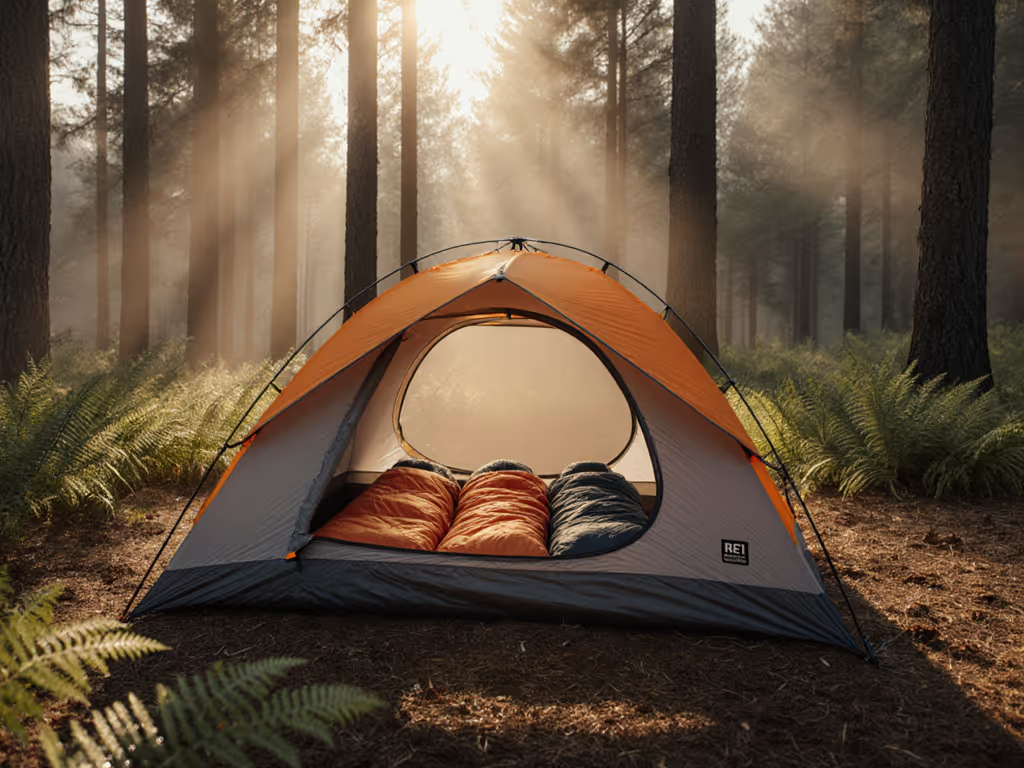
When comparing REI Campwell 4 review options and beginner tent recommendations, the temptation is to chase specs on a website. But specs are theater. A 60-square-foot floor, 62-inch peak, and fiberglass poles tell you dimensions, not whether you'll sleep dry through a 25 mph wind gust, whether your partner's shoulder will graze wet fabric at 2 a.m., or whether the rainfly will flap all night like a flag. This analysis separates real performance from marketing language by translating wind, rain, and fit data into thresholds you can trust.
Who This Tent Is, and Isn't
The Campwell 4 is a 3-season car camping tent aimed squarely at novice campers and families making the leap from tent-free trips or discount-store standby shelters[2]. At 11 lbs. 14.3 oz. packaged weight, it's heavy for backpacking (nearly 28 inches long when packed)[2]. This tent rides in a car trunk, not on your back. If you're building a go-light ultralight kit or winter-mountain shelter, stop here. The Campwell was engineered for basecamp livability on a budget, and it commits fully to that mission.
The core pitch: spaciousness, simplicity, and cost without pretense. A 4-person tent that actually fits four people (with sleeping pads), a 2-pole structure that assembles in 15 minutes in daylight, and a price tag ($239-$279 street price) that doesn't trigger spousal arguments before the first night[2][6]. What trade-offs appear once you're inside, and in what weather?
Interior Space and Livability: Numbers vs. Reality
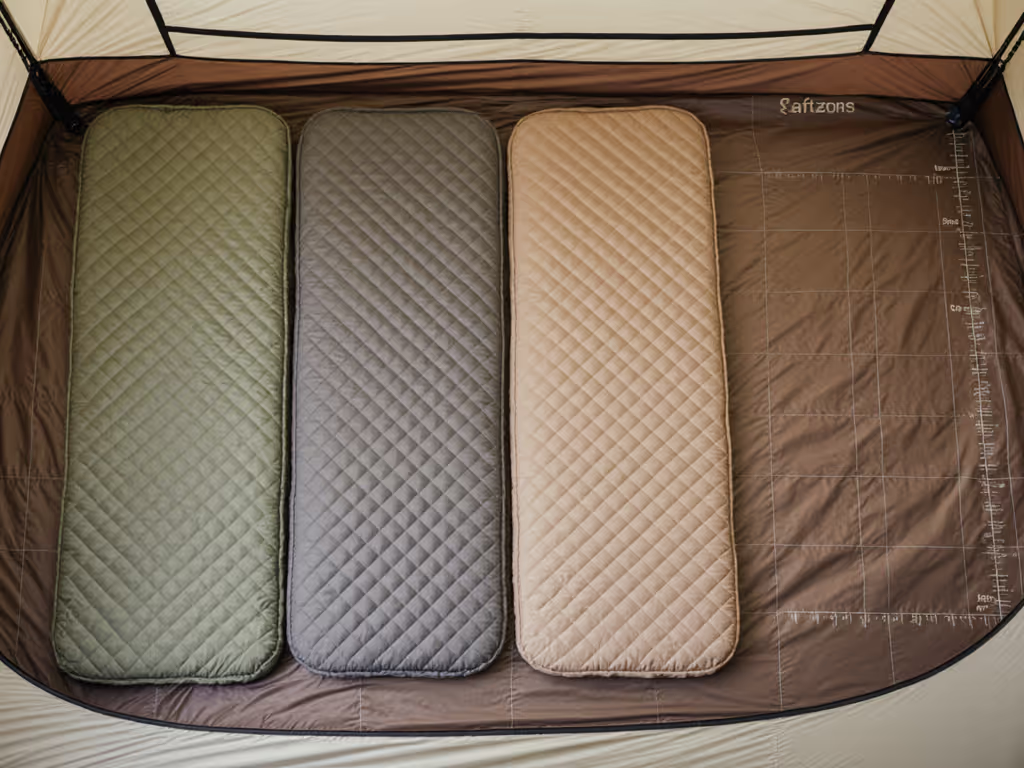
Marketing departments love rectangles. The Campwell measures 100 inches long and 87 inches wide, yielding a floor area of approximately 59-60 square feet[1][2]. The peak height reaches 62 inches, enough to sit upright if you don't insist on standing fully straight[2]. Let's stress-test this against the audience pain point: Do sleeping pads and humans actually fit?
Independent testing confirms that four standard 25-inch-wide sleeping pads can nest across the 87-inch width with "a slight squeeze"[2]. If you're unsure about real occupancy, see our tent size guide for realistic capacity examples. Two adults and two children (or two adults and a dog) occupy that footprint comfortably. The steep sidewalls (a deliberate design choice) prevent end sleepers from feeling boxed in, counteracting the classic cabin tent claustrophobia[2]. This is rare honesty in a budget tent: the marketing claim matches field reality.
Where livability frays is ventilation and condensation control. On hot, humid nights (especially in the 70 F range with no wind), the Campwell avoids overt sweat pooling on the ceiling, as one reviewer reported sleeping comfortably in Ozark humidity without condensation[6]. However, the toupée-style rainfly (covering only the ceiling, not the walls) creates a thermal envelope that traps moisture if the interior mesh window is not fully opened and the front door kept cracked. One reviewer noted that "a hot night, with little wind, but enough moisture to don the rainfly, would likely be a night with less sleep"[2]. This is not a failure; it's a limitation of the 3-season design. Stake pattern before pole pressure (your comfort hinges on setup discipline, not just tent fabric).
REI Campwell 4 Features: Setup, Pole System, and Guylines
The tent uses two fiberglass poles at 12.7 millimeters in diameter[1], a geometry that trades lightweight materials for easy assembly. The "symmetrical pole structure and dead-end pole sleeves"[1] mean no complex pole threading or sequential seating, slide each pole into its sleeves from end to end, clip the interior guylines, and the tent assumes its shape. Two people pitched the Campwell in under 20 minutes in daylight; setup in rain or darkness slowed by 30-50%, but no confusion emerged[2].
The rainfly clips on via color-coded buckles and velcro straps looped around poles, a toupée design that is "extremely easy to set up"[2]. That convenience carries a cost: the fly anchors to the tent fabric via its perimeter, not to the ground or pole base. This limits how taut you can tension the fly, and in high wind or heavy rain, the fit is less controlled than a full-coverage geodesic dome (like the REI Base Camp 4)[2].
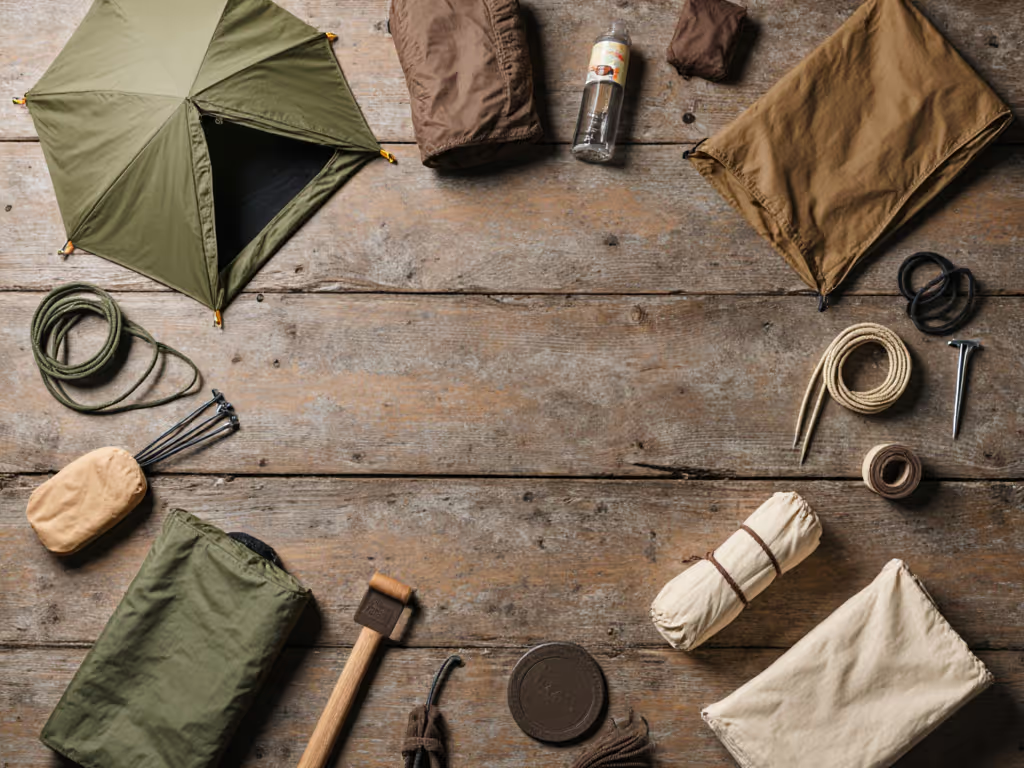
Guylines attach via included tighteners and stake out at a 30-degree downward angle, minimizing tripping hazards[2]. The included black paracord guylines are functional but heavy; reflective cord and aluminum Y-stakes would reduce visual drag and shave 4-6 ounces. The stakes themselves are thick shepherd-pattern metal, durable but overkill for soft ground, and a swap to titanium Y-stakes cuts considerable weight from your pack kit[2].
Setup time metric: Daylight pitch on known ground, two campers, no rain: ~15-18 minutes. Pitch in darkness or drizzle, first-time users: 30-40 minutes. No catastrophic failure points; the 2-pole system tolerates inexperience. New campers can speed things up with our easy tent setup guide for storm-proof pitching basics.
Weather Resistance: Wind, Rain, and the Honest Limits
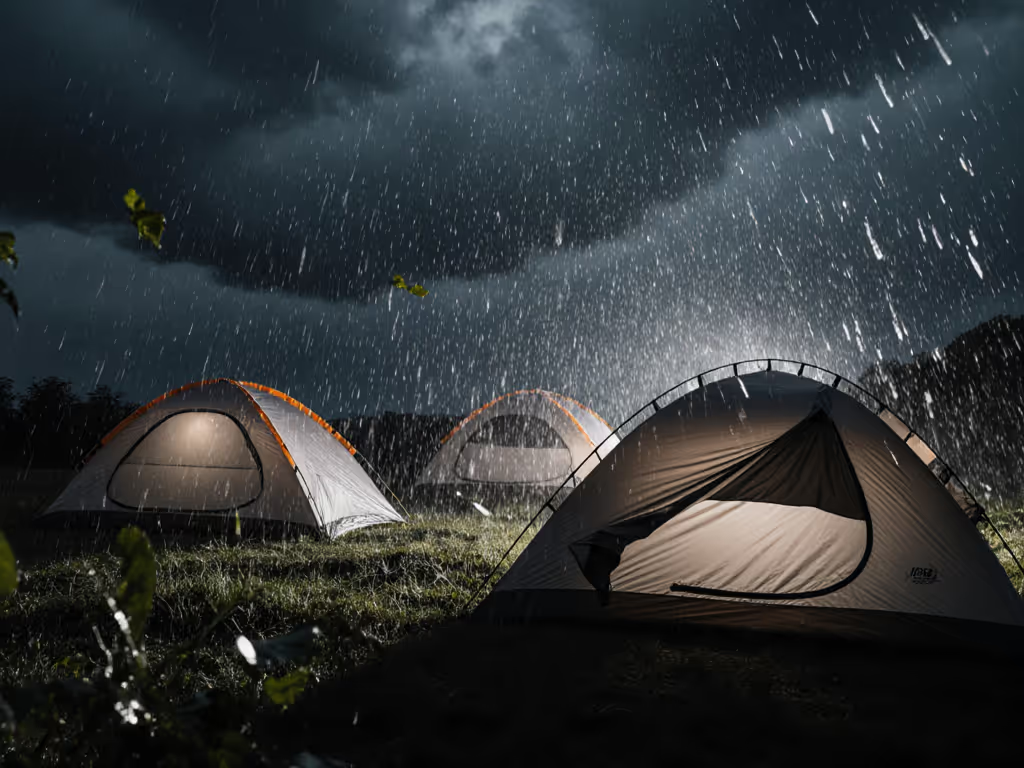
This is where data separates confidence from bravado. The Campwell was field-tested in 25 mph wind gusts with "no threat of any damage," and the tent broadsides held strongly[2]. The poles absorbed the energy cleanly, without the snapping fatigue modes that plague cheaper single-wall designs. However, the ceiling-only rainfly creates a vulnerability in wind: without ground-anchored vestibule walls, lateral wind can slip under the fly and find the window or door seals.
Rain performance: The rainfly's waterproofing held fast throughout testing, and the sealed seams on the tent body beaded water reliably[2]. The steep sidewalls (a structural asset) shed rain like a pitched roof. However, this advantage vanishes in driving rain: "the Campwell sacrifices protection from driving rain. The overhang of the fly just barely protects the window. With the door open, rain can easily drip from the fly, into the tent."[2] Wind-driven rain around the window reinforcement is a known failure mode[2]. One reviewer camping in Ozark rain all week reported zero water ingress, likely because rain angles were low[6].
Storm readiness threshold: Campwell 4 is rated 3-season. Expect solid performance in spring and fall rain events (5-15 mm/hour, <20 mph sustained wind). In coastal squalls or summer thunderstorms with sideways rain and gusts above 30 mph, the design trades protection for livability. It won't fail catastrophically (poles won't snap, fabric won't tear), but drafts and drips enter the equation.
You can manage this. Ensure the rainfly is pitched taut (loop velcro straps firmly), angle stakes to pull the fly perimeter toward the ground, and deploy the flexible window toggle in the closed position during rain events. Comfort is engineered long before the first raindrop falls.
Durability: Fabric, Seams, and Long-Term Wear
The Campwell uses 150-denier polyester on the floor and a DWR-treated polyester canopy[1], materials chosen for cost and water repellency, not bombproof durability. The fabric beads water impressively and shows no immediate breakdown under normal camp wear[6]. However, the review noted a concern: "the added stress on the seam, especially where the clasps are sewn directly in, does carry some concerns for long-term durability"[2].
This is the trade-off of budget construction: the zippered door and window flap attachments are points of stress concentration. Repeated open-close cycles, especially when wet, invite zipper creep and seam fatigue. REI's warranty covers manufacturing defects, but the Campwell's two-season shelf life before noticeable wear is realistic for family use with active children and dogs.
Abrasion resistance: The floor fabric is adequate but not armored. Dog claws, tent stakes driven into the interior by accident, and repeated gear shuffling will scuff the coating. A footprint (sold separately for $35-$40) is not bundled, reducing base price but leaving the floor exposed[3]. Get the right tent footprint sizing to prevent abrasion and water pooling under the tent.
Pole durability: Fiberglass is flexible and tolerates wind loads gracefully, but it is brittle under torsional stress (twisting). If a gust loads a pole at a sharp angle, or if a pole is bent hard during setup, fracture risk is real. Graphite or aluminum poles are more expensive but less prone to sudden failure.
Verdict on durability: The Campwell is repairable (seams can be resealed, zippers replaced, poles splinted), but it is not a buy-once-for-life shelter. Expect 3-5 seasons of regular family use before major service is warranted.
How It Compares: Campwell 4 vs. REI Base Camp 4
To ground the Campwell's position in the beginner landscape, a quick comparison with REI's premium 4-person car camping option:
The REI Base Camp 4 uses a geodesic-dome design with interior dimensions of 8 ft. 4 in. by 7 ft. (100.5 by 84 inches) and a 60-inch peak[5]. It weighs approximately 18-20 lbs. and costs $499-$599[4]. The Base Camp features dual vestibules totaling 44.5 square feet of gear storage (one at 27 sq. ft., one at 17 sq. ft.)[5], compared to the Campwell's zero vestibule. The dome structure encloses two roof vents accessible from inside the tent, and the dual-door design with mesh and solid layers offers superior climate control[4].
Why the Base Camp costs more:
- Dome geometry distributes wind load across multiple poles (typically 4-6), reducing peak stress.
- Vestibules shield doors from side rain and offer weatherproof storage for muddy boots and pet crates.
- Dual vents allow temperature and humidity tuning without opening doors or windows.
- Geodesic footprint increases usable headroom and reduces shoulder-wall crowding.
Why the Campwell 4 wins for true beginners:
- Simplicity: 2 poles vs. 4+; 15-minute setup vs. 25 minutes.
- Cost: $239 vs. $549 (a $310 difference).
- Familiarity: Rectangular cabin design mirrors backyard frame tents, reducing cognitive load.
- Livability for budget: Fits four humans and gear compactly without the bulk.
If you prioritize vestibule storage, weather protection, and climate control, the Base Camp justifies the premium. If you're testing whether car camping fits your family's life, and money is tight, the Campwell is the rational choice.
Entry-Level Tent Durability: What Breaks First
Based on field reports and testing, priority wear points on the Campwell 4:
- Zippers: Pinched fabric, zipper creep in humidity, teeth misalignment.
- Seam stress at attachment points: Where the window flap and door clasps anchor to fabric.
- Fiberglass pole flex fatigue: After 3-4 seasons of high-wind exposure, microcracking at pole bends.
- Stake attachment points: The stitching where guy ropes meet the rainfly perimeter.
- DWR coating degradation: Water repellency fades over 2-3 seasons; fabric beads less effectively.
None of these failures are catastrophic during a camping trip, but they signal end-of-life for the tent. Replacement poles, seam sealing kits, and new stakes extend life by 1-2 seasons at minimal cost (~$40-$80 total).
Setup and Ease of Use: The Real-World Test
The Campwell's 2-pole structure is intuitive: clip the poles into the sleeves, secure the interior guylines, and tension the fabric. For users migrating from cheapo Ozark Trail domes or borrowed Coleman family tents, the Campwell feels premium: the clips are solid, the pole ends don't slip, and the fabric is taut after assembly.
What complicates setup:
- Rainfly color-coded buckles require attention: Mismatched buckle means a wrinkled, loose fly.
- Stake angles matter: At 30 degrees, stakes must be driven at precise angles to avoid uproot in wind.
- Guyline tensioning: The tighteners don't lock; loose knots creep over time, especially if a wind gust loads the tent.
A first-time user with video guidance and two people pitches the Campwell in 20 minutes. A solo novice in the dark might stretch to 40 minutes. No hidden pitfalls; just attention to sequence.
Ventilation, Condensation, and Temperature Control
The Campwell does not have floor vents or dual roof vents like the Base Camp 4. Ventilation relies on two mechanisms:
- Large mesh window on the rear: Can be opened fully or covered by a flexible toggle flap for privacy or draft control[1].
- Front door: Mesh or solid zipper; no option to open the mesh while rain covers the door.
On warm, calm nights, cracking the door and opening the rear window achieves cross-ventilation without cold drafts. On humid shoulder-season nights, condensation pools on the ceiling unless you actively manage humidity by running the window open even if it feels cool. For proven methods to cut ceiling drip, follow our tent condensation guide. Some reviewers reported "noisy and drafty" nights, meaning you hear wind but may not feel cold, because the tent doesn't insulate, it just separates you from the weather[2].
Condensation risk: Medium-high in spring and fall; moderate in summer with ventilation discipline.
Real Costs: Budget Tent Math
- Tent: $249-$279 (street price)
- Footprint (optional but recommended): $35-$40
- Upgraded stakes (aluminum Y, 8-10 count): $15-$25
- Reflective guyline cord (replace included black cord): $10-$15
- Seam sealer and repair kit: $20-$30
- Total invested: $340-$390 for a weatherized, durable kit.
This is still less than the Base Camp 4 alone. Over 3-5 seasons, the per-trip cost is negligible. Over 10+ seasons, you're looking at replacement seams or a new tent.
Who Should Buy the Campwell 4
The Campwell 4 is the right fit if:
- You're a beginner or returning camper testing whether the hobby sticks with your family or partner.
- You camp within a 4-hour drive, in state or national parks with established campgrounds (not exposed ridge-line or coastal sites).
- You prioritize sleeping space and ease of setup over weight or premium weather protection.
- Your season is spring, summer, and early fall - not winter or high-altitude alpine.
- You have a car and a trunk, not a single-vehicle household or an SUV with gear constraints.
- Kids and/or dogs are in the tent - space and quick pitch are non-negotiable.
- You're willing to manage ventilation and condensation with deliberate door/window angles rather than relying on automatic climate control.
Who Should Look Elsewhere
Skip the Campwell if:
- You backpack or hike into campsites; the weight is prohibitive.
- You camp in high-wind or coastal zones where 30+ mph gusts are common.
- You need vestibule storage for muddy gear or pets.
- You camp in humid subtropical or tropical climates where overnight condensation is inevitable.
- You're a solo camper and prefer lightweight 2-person shelters.
- You demand standing headroom throughout the tent interior.
- You're willing to pay more for multi-season durability and resale value.
Final Verdict: Comfort Is Engineered
The REI Campwell 4 delivers on its promise: an inexpensive, easy-to-pitch 3-season tent that fits four humans and gear, withstands moderate wind and rain, and sleeps comfortably on a budget. It is not an expedition shelter, not an ultralight marvel, and not a decade-long investment. It is an honest, uncompromised tool for car campers and families who treat the tent as a bedroom, not a marketing statement.
Where the Campwell shines is in simplicity and livability. Two fiberglass poles, a straightforward clip system, and a toupée rainfly mean setup is fast, mistakes are forgiving, and no family argument erupts during assembly. The floor space is real (four 25-inch pads fit), and the interior height lets you sit upright without ducking. Weather sealing is adequate for rain and moderate wind, provided you stake pattern before pole pressure: guylines taut, stakes driven at proper angles, and the rainfly pitched firm.
Its limits are clear: no vestibule, vulnerable to side-rain, and condensation prone in humid conditions. The 150-denier floor and seam stress points signal 3-5 seasons of use before major service. The toupée rainfly trades weather protection for ease of pitch.
For a family or pair of adults making the leap from hotels and casual car camping to regular tent trips, the Campwell 4 is the rational first choice. It removes friction (easy setup, spacious interior), costs less than premium alternatives, and teaches camp discipline without punishing mistakes. Upgrade to a Base Camp 4 or similar dome later, once you've logged 10-15 nights and know your actual weather tolerance and setup routine. But start here: comfort is engineered long before the first raindrop falls, and the Campwell proves that engineered comfort doesn't require a premium price.
Related Articles