Tentsile Strato 2P Review: Real-World Hammock Tent Comfort
By Mateo Alvarenga • 17th May
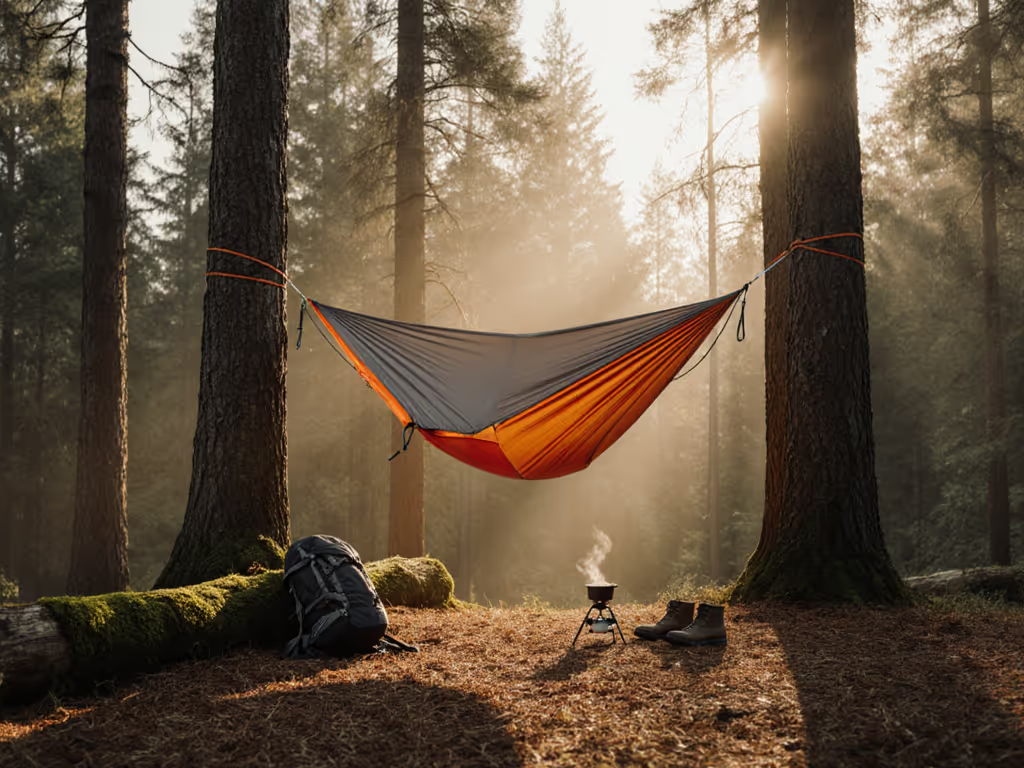
In this Tentsile Strato 2P review, we're going to skip the marketing capacity talk and get to what you actually care about: how this hammock tent hybrid feels to share with a real human (maybe a kid) and possibly a dog. If you've been hunting for an honest hammock tent hybrid review that explains space, sleep quality, and setup, rather than just listing specs, you're in the right place.
You're probably asking:
- Will this elevated shelter really be more comfortable than a ground tent or hammock?
- Can two adults actually sleep without rolling into the middle all night?
- Where does the dog go? Where do muddy shoes go?
- What's the real tree tent camping experience like when it rains, gets windy, or drops close to freezing?
I'm going to answer all of that through the lens I always use: pad layouts, headroom maps, and door choreography. I treat tents like bedrooms (because if the sleep doesn't work, the trip doesn't work).
Fit-first layouts turn marketing capacity into real sleep space.
Let's start by grounding what the Strato 2P actually is, then walk through fit, comfort, and whether it earns a place as your main minimal impact camping shelter.
What Is the Tentsile Strato 2P, Really?
The Strato 2P sits in that interesting space between a classic hammock and a full tree tent: a hammock tent hybrid.
Instead of:
- a ground tent that relies on flat, rock-free real estate, or
- a single-person hammock that leaves your partner (or kid) on the ground,
... you get a suspended, enclosed sleeping platform sized for two. Think: a tensioned bed with tent walls and bug netting.
Key implications of that design:
- You sleep off the ground (no rocks, roots, or puddles directly under you).
- The shelter relies on three or more solid anchor points (usually trees).
- Comfort depends on strap tension and angle as much as it does on fabric and poles.
- Your elevated shelter performance (stability, sag, and how much you roll together) is a tuning problem, not just a spec problem.
Used well, the Strato 2P delivers a very particular tree tent camping experience:
- Waking up to a forest view above the underbrush.
- No crushed vegetation or muddy footprint (an inherently minimal impact camping shelter if you use wide straps and follow Leave No Trace tent setup).
- A shared, floating bed instead of two separate hammocks.
But that same design raises big questions about space, posture, and how two bodies plus gear really fit. So let's map that.
Layout & Fit: Can Two People Actually Sleep Here?
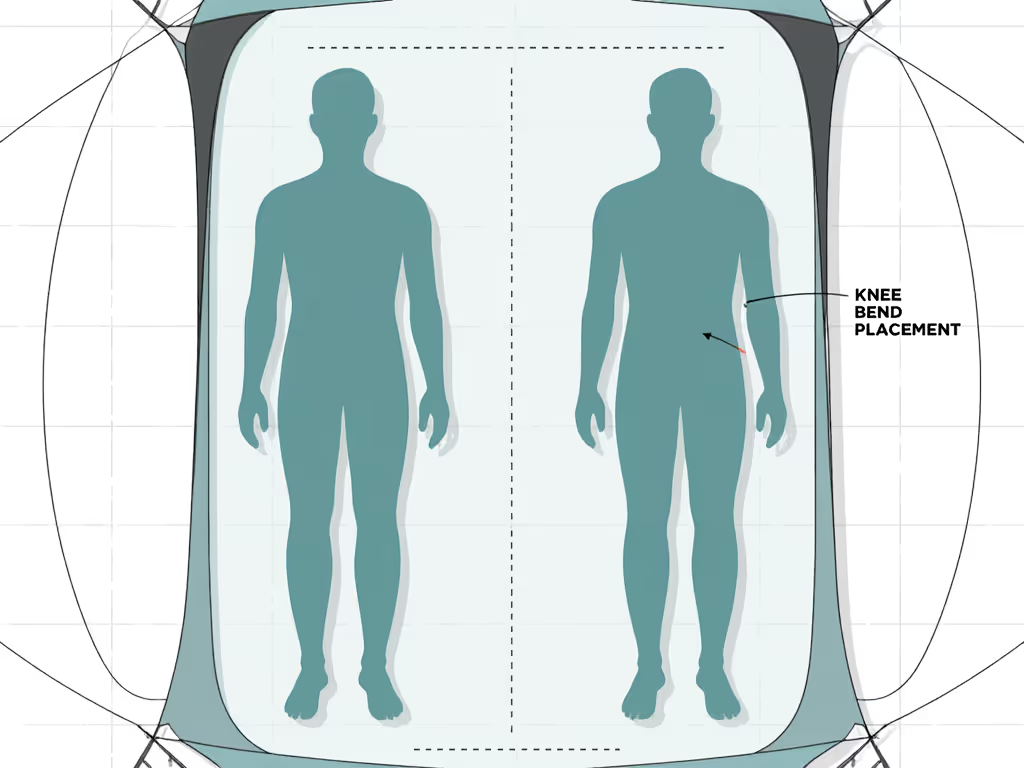
I approach every "2-person" shelter the same way: I build a pad layout template and crawl around on it. That process has turned plenty of "2-person" tents into one-person-plus-dog shelters.
With a hammock-tent hybrid like the Strato 2P, we don't have a rigid floor, but we do have a defined sleeping platform. The question is: How many real sleeping pads fit without conflict?
Step 1: Translate Specs into a Pad Template
Instead of trusting capacity labels, do this at home:
- Look up the platform width and length for your Strato 2P.
- On your living room floor, tape out a rectangle to match that footprint.
- Lay down the pads you actually use:
- Common pair: two 20 x 72 in (51 x 183 cm) pads.
- Roomier pair: one 20 in + one 25 in pad.
- Add a 6-8 in (15-20 cm) "no-sit" margin around the edges to simulate the softer, less-supportive edge zone of a suspended bed.
If you can't fit your pad combo with that margin on the floor template, you'll feel even more cramped once the fabric is sagging between trees.
Fit check: shoulders, knees, paws.
When you and a partner lie on your backs or sides inside that template, pay attention to three collision zones:
- Shoulders – Do you touch or overlap when both of you are on your sides?
- Knees – Does one person's fetal curl intrude onto the other's pad?
- Paws – Where would a dog reasonably curl up without forcing someone to the edge?
If the answer to any of these is "we're fighting for space," the Strato 2P is best treated as a 1.5-person shelter for one adult plus kid or dog, not a full two-adult bedroom.
Realistic Sleeping Scenarios
Based on typical 2-person elevated-platform dimensions, here's how the Strato 2P usually works in practice:
1. Two average-size adults (up to ~5'10" / 178 cm)
- Side-by-side pads fit, but you will share a soft middle zone.
- Occasional gentle roll-together is normal; it's a hammock-tent, not a rigid bed.
- Best for couples comfortable with contact, or close friends who can treat the middle as a neutral zone.
2. One adult + child (under ~10 years old)
- Excellent fit profile.
- Child can share the adult's pad or have a short pad at one side.
- Adult can stay on the flattest part of the platform while the child enjoys the slightly more curved edge.
3. One adult + medium dog (30-60 lb / 14-27 kg)
- Dog usually ends up by your legs or between your feet.
- Add a tough, grippy dog mat so claws don't concentrate stress on the fabric.
- Expect a bit more roll-together when the dog shifts around.
4. Two tall adults (6'+ / 183+ cm)
- Height, not just width, becomes the limiter.
- Toes and head may land in the more curved zones near the platform ends.
- You'll want to pitch with extra tension and a very level setup to keep sag under control.
If you're tall, do a full mock-up: lie down on your actual pads inside the taped rectangle with pillows. If both head and feet are brushing the no-sit margin, you'll feel it even more once suspended.
Headroom & Living Space: Can You Sit, Change, and Share?
Classic hammocks are great for lying down, not great for anything else. One of the Strato 2P's biggest promises is a more tent-like interior: space to sit up, read, and change clothes without feeling like you're in a sagging taco.
Because designs vary, think in terms of zones rather than inches:
- Central spine zone: Highest and flattest section; this is your sit-up-and-read space.
- Shoulder lanes: Slightly sloped; still good for reclined sitting or supported side-sleeping.
- Edge gutters: Curved up; good for feet, loose gear, not great for extended sitting.
Annotated Headroom Map (Conceptual)
Picture the platform divided lengthwise:
- Middle third: you can usually sit cross-legged without brushing the roof.
- Head-end third: you can semi-recline against the wall to read or look out.
- Foot-end third: better for storage and dog space than for human torsos.
To test this before your first trip:
- Hang the Strato 2P at home or in a nearby park.
- Each person climbs in one at a time and tries three positions:
- Sitting upright in the middle.
- Sideways sitting near "their" edge entry point.
- Kneeling to change pants.
- Note where your head touches the canopy. Those are your no-change zones.
If both of you can't sit up at once without bonking into fabric, this will feel more like a dedicated sleeper than a tiny living room. Some couples are fine with that; others want a "porch" feeling.
Door & Entry Choreography
Ground tents live or die on door placement and vestibule logic. Elevated shelters add another layer: how you climb in and out without shaking the whole rig or stepping on someone.
When you test the Strato 2P:
- Practice nighttime bathroom runs:
- Who sleeps closer to the entry zipper?
- Can the inside person exit without fully waking the outside sleeper?
- Decide where shoes and wet gear live:
- Many hammock-tent hybrids add gear slings or under-floor nets.
- If not, you'll want a small ground tarp "landing pad" for shoes and a dry bag.
- If you have a dog, rehearse entry and exit with the dog on leash so they learn the ramp or lift routine.
If getting in and out feels like a circus during a sunny backyard test, it will feel much worse at 2 a.m. in the rain. This is where door/vestibule choreography matters as much as square footage.
Tentsile Setup Process: From Tree Selection to Tension
The most underestimated part of any hammock tent hybrid review is the setup learning curve. A freestanding tent can be slapped onto almost any flat spot. The Strato 2P demands more judgment.
1. Tree Selection
You need three solid anchor points (trees, posts, or a mix) that meet three criteria:
- Healthy and solid: No dead branches overhead, no punky bark, no obvious rot.
- Diameter: Big enough that your straps don't bite in (wider is safer).
- Spacing: Roughly matches the manufacturer's recommended distances.
If you routinely camp in sparse desert, alpine, or above-treeline zones, you may often find yourself forced back to ground mode or a backup tent. For picking wind-sheltered, well-drained spots that protect any shelter, see our site selection guide. In dense forest, you have more choice, but still need good judgment.
2. Anchor Height and Strap Angle
Think of each strap as a tension line in a triangle:
- Too horizontal: the platform sags like a hammock, and you roll to the middle.
- Too steep: the load on each anchor skyrockets, stressing both trees and hardware.
A moderate upward angle from platform to tree (often somewhere in the 20-30° range) is generally recommended for balanced comfort and safety. Always follow any maximum height and angle guidelines in your Strato 2P's manual.
3. Leveling and Fine-Tuning
The fastest way to ruin an otherwise good tree tent camping experience is a bed that's subtly tilted:
- Head downhill: overnight blood-rush headache.
- Feet downhill: sliding all night into the foot-end wall.
Dial this in:
- Have your heavier sleeper lie roughly where they'll sleep.
- Adjust the webbing on each anchor until the platform feels level under load.
- Re-check after 10-15 minutes; new fabric and knots can creep a little.
Once you've done this 3-4 times, the Tentsile setup process becomes muscle memory and only adds a few minutes versus pitching a complex ground tent. But your first setup will likely take 20-30 minutes of tweaking. Plan for that at home, not in the dark at a trailhead.
Comfort & Climate: Warmth, Ventilation, and Condensation
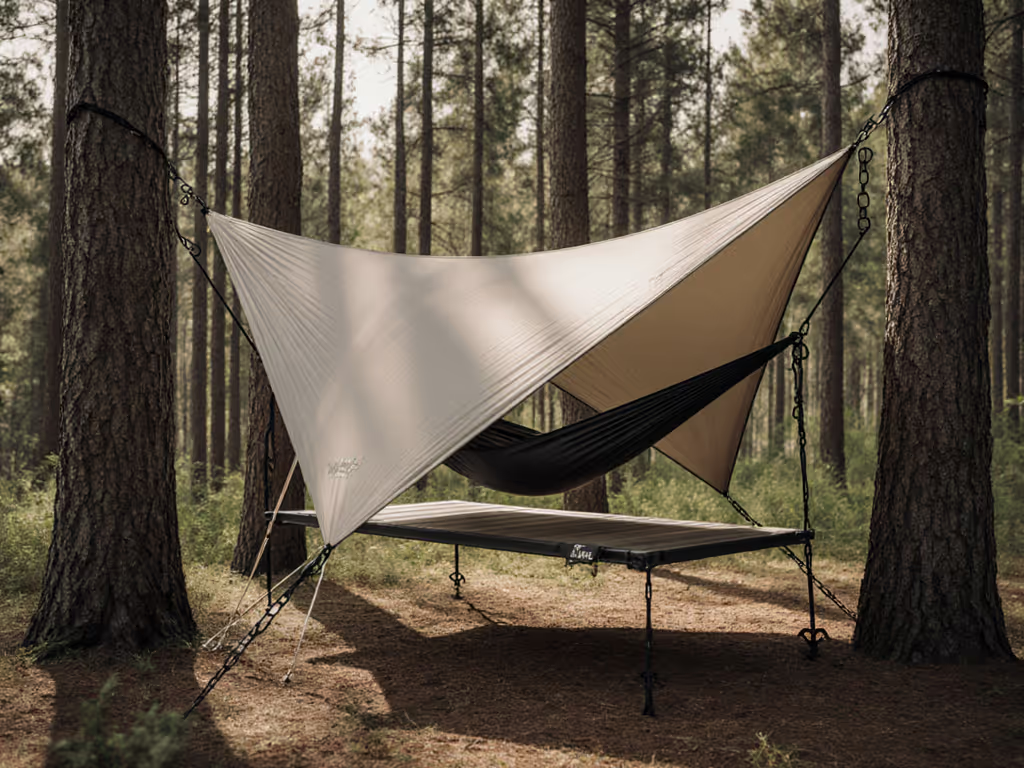
Suspended sleep solves the "rock and root" problem but introduces two new ones:
- Cold from below – There's air flowing under you all night.
- Air movement above and around you – Great for summer, tricky in shoulder seasons.
Insulation Strategy
To stay comfortable:
- Use insulated air pads or foam pads on the platform; uninsulated ultralight pads often feel much colder in an elevated shelter.
- For sub-freezing use, consider a hammock underquilt hung below the fabric to create a dead-air pocket; this also reduces conductive heat loss.
- Treat your comfort temperature as about one full clothing layer warmer than you'd need in a similarly enclosed ground tent.
Ventilation and Condensation
The Strato 2P's elevated design naturally improves air circulation, which is a plus in humid climates. However:
- In warm conditions, fully opening doors and vents makes the interior feel breezy and pleasant.
- In cool, wet conditions, you'll want to partially close windward vents while leaving leeward sides cracked to avoid stuffy air and condensation.
Because you're above the ground, you avoid some ground-level fog and splash-back, but you can still wake up to interior condensation if two adults and a dog are breathing into a small volume of air. Learn practical condensation control techniques to dial in vents and airflow in any tent. Wiping down with a small camp towel in the morning is generally all it takes.
Noise and Motion
Two things that surprise people new to elevated shelters:
- Fabric noise: rain on a tensioned fly has a different pitch than on a dome tent. Some find it soothing; others, loud.
- Sway: With a well-tensioned setup between solid trees, sway is minimal, more of a gentle give than a swinging hammock. If you feel seasick on boats, do a one-night backyard test before committing to a week-long trip.
Elevated Shelter Performance in Weather & Over Time
A Strato 2P can be a very solid elevated shelter in real-world weather if you respect its constraints.
Rain and Wind
Strengths:
- No ground pooling: Even if water runs under you, your bed stays dry.
- Good airflow: Helps keep interior drier in extended wet spells.
Watch-outs:
- If the fly is small or closely fitted, wind-driven rain can sneak in at the sides. A meticulous pitch with tight fly edges and properly angled guy lines is essential. For gear that boosts storm protection, check our rainy-camping accessories guide.
- Tree tents can act as subtle sails in big gusts. Set up in more sheltered pockets of forest rather than exposed ridgelines.
Snow and Shoulder Seasons
Light snow is usually fine; substantial snow load is not what these are built for. Brush off accumulating snow through the night if you're pushing into shoulder-season storms.
For chilly-but-not-arctic use:
- Combine insulated pads with a draft collar (buff, hood, or balaclava).
- Close windward doors, leave a small vent downwind to keep humidity moving.
Durability & Dog/Kid Use
Suspended shelters distribute weight through fabric and stitching instead of a rigid pole frame. That's both a blessing and a responsibility.
- Use wide tree straps to protect bark and keep loads more evenly distributed.
- Keep dog nails trimmed and blunted; add a dog-specific mat in their area.
- Teach kids no jumping on the platform (treat it like a bed, not a trampoline).
If you follow those rules, most modern hammock-tent hybrids hold up well through years of family and pet use, and components like straps and small hardware pieces are typically repairable or replaceable. If something fails mid-trip, these field repair steps can save the shelter.
How the Strato 2P Compares to Other Shelter Types
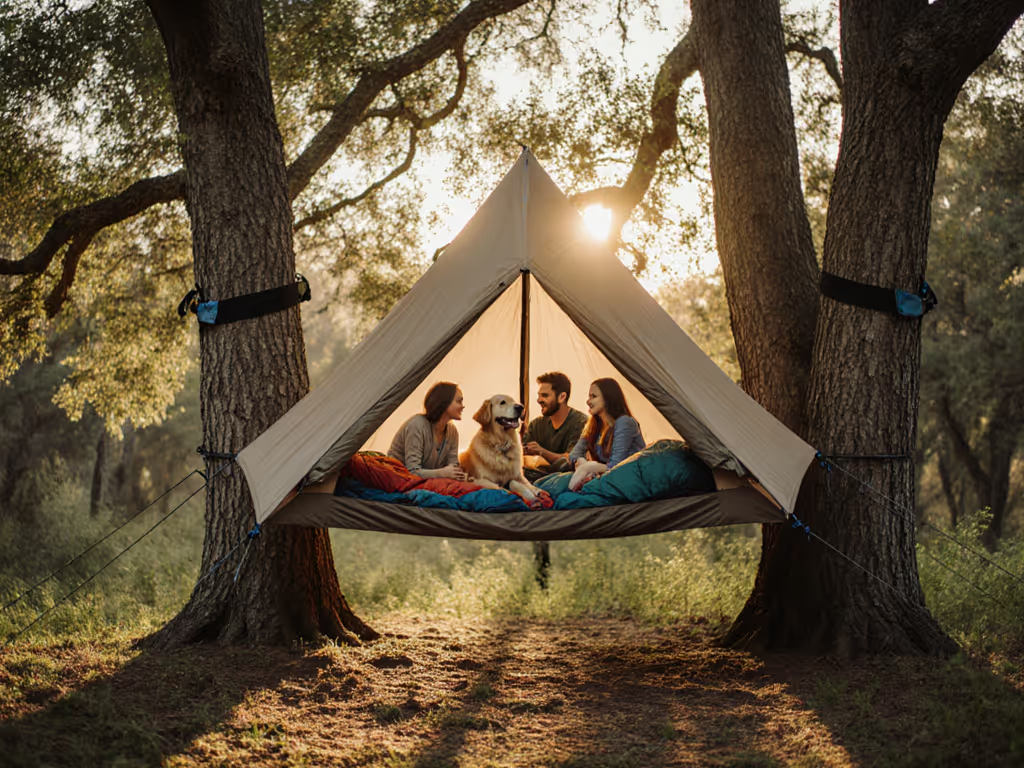
With no affiliate products to plug here, I'll keep this comparison category-based: think of the Strato 2P versus a standard 2P ground tent and a basic two-hammock + tarp setup.
Versus a 2-Person Ground Tent
Pros:
- Off the ground: no rocks, roots, or mud.
- Romantic/novel tree tent camping experience that feels special for kids and partners.
- Potentially less ground impact with proper tree-strap use.
Cons:
- Requires appropriate trees; less flexible in desert or alpine.
- Setup skills matter more; more room for user error.
- Vestibule-style storage is usually less straightforward; you solve this with slings, under-nets, or ground tarps.
For couples who treat the tent like a bedroom plus closet, a well-designed ground tent still wins on storage ease and predictable setup. For those prioritizing novelty, view, and lying above the damp forest floor, the Strato 2P shines.
Versus Two Separate Hammocks + Tarp
Pros of the Strato 2P:
- Shared platform; you're not sleeping several feet apart.
- One integrated bug/fly system instead of two independent rigs.
- Easier to manage kids and pets on one platform.
Pros of Two Hammocks:
- Individual comfort tuning (each person sets tension and sag).
- Less roll-together; each person is their own system.
- Simpler backup: if a tree spot is tight, you can angle hammocks differently.
If you want a shared "floating bedroom" and hate feeling separated at night, the Strato 2P concept makes a lot of sense. If you and your partner have very different sleep postures or movement patterns, separate hammocks plus a shared tarp may be more peaceful.
Who the Tentsile Strato 2P Is Best For (and Who Should Pass)
Great fit if you:
- View camping as bedroom-in-the-forest time, not just survival sleep.
- Frequently camp in forested areas with reliable trees.
- Travel as one adult + kid, or one adult + dog, or a couple comfortable sharing close quarters.
- Are willing to practice the Tentsile setup process at home before a big trip.
- Care about minimal impact camping shelter options and want to avoid ground compaction in sensitive areas.
Think twice if you:
- Regularly camp above treeline, in desert, or in very sparse forests.
- Are both tall, broad-shouldered side sleepers who already feel cramped in most 2P tents.
- Need lots of indoor gear storage or vestibule-like coverage.
- Hate any feeling of movement during sleep, even subtle.
In those cases, a well-designed 3-person ground tent used as an ultra-roomy 2-person (plus dog) bedroom may actually serve you better.
Actionable Next Steps: How to Know if the Strato 2P Will Work for You
To turn this review into a concrete decision, here's a simple checklist you can tackle in an afternoon.
- Run the Floor Template Test
- Tape out the Strato 2P's platform dimensions on your floor.
- Lay out your pads, pillows, and a dog mat (if relevant).
- Do a full Fit check: shoulders, knees, paws with everyone who will actually sleep there.
- Practice a Backyard (or Park) Pitch
- Hang the shelter between real trees.
- Time your setup from bag to "ready for bed" on first attempt, then again on third attempt.
- Aim to get that under ~15 minutes before taking it on a real trip.
- Do a One-Night Comfort Trial
- Sleep out at home or close to home.
- Note: cold spots, sway sensitivity, and how night-time bathroom exits feel.
- Adjust pad insulation, strap tension, or sleeping positions based on what you learn.
- Plan Your Gear Storage System
- Decide exactly where shoes, packs, and wet gear live (under-sling, ground tarp, separate gear hammock).
- Rehearse your door/vestibule choreography so you're not improvising in rain.
- Match It to Your Trip Map
- Look at where you actually camp: mostly forested state parks, or lots of tree-less sites?
- If more than ~25-30% of your usual camps lack good trees, plan a backup shelter or reconsider whether a hybrid tree tent should be your primary.
If the Strato 2P passes your pad template, backyard pitch, and one-night trial, you'll know you're not just buying a cool concept — you're buying a bedroom that actually works for your bodies, your habits, and your trips.
Final Thoughts
The Tentsile Strato 2P (and hammock-tent hybrids like it) are most rewarding when you evaluate them not as gadgets, but as sleep systems:
- Start with layouts and headroom maps, not just weights and slogans.
- Treat setup as a learned choreography you can practice and perfect.
- Consider everyone's comfort: partners, kids, and dogs.
Do that, and you transform "2-person capacity" from a marketing line into a reliable, elevated bedroom where the whole crew actually sleeps well. And when the bedroom works, the whole trip suddenly feels a lot easier.
Fit-first layouts turn marketing capacity into real sleep space.
If you'd like, next we can walk step-by-step through building a custom pad layout diagram for your exact height, pad sizes, and pet setup so you can sanity-check any tent or tree tent you're considering, not just the Strato 2P.
Related Articles