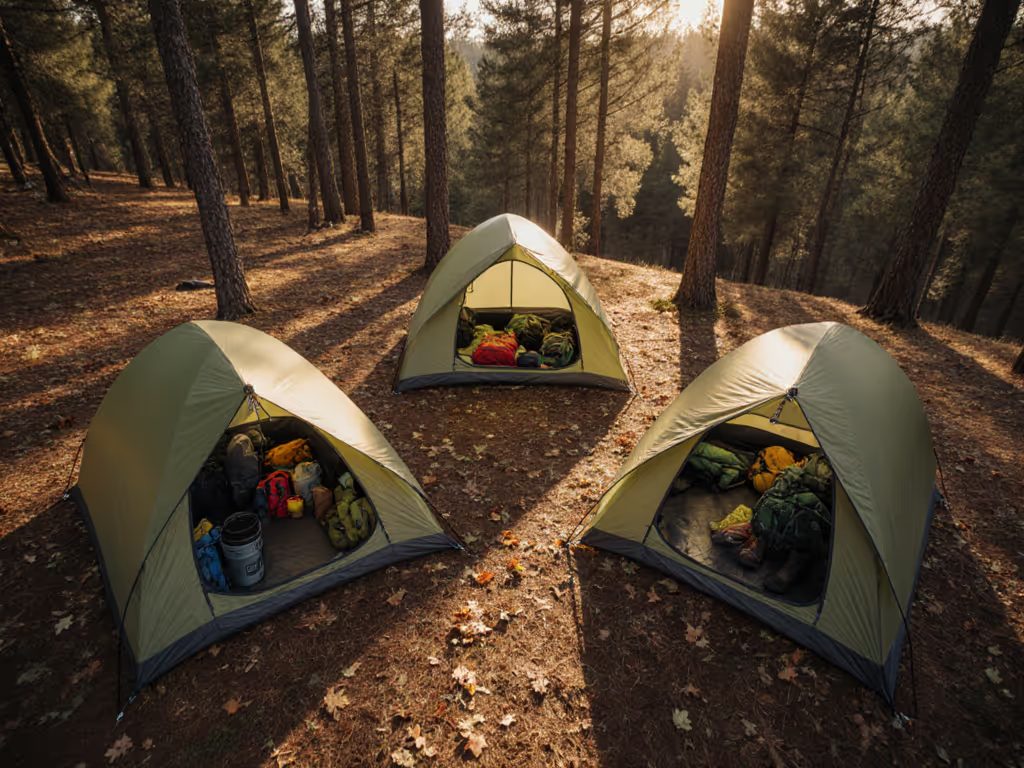

Tall Tent Comparison: Headroom Measured, Ranked
By Aisha Mbaye • 19th Mar

When you're shopping for tents for camping, headroom often gets relegated to a single spec line, a number that barely hints at whether you'll sleep comfortably or spend three nights hunched like an apology. For tall campers, high ceiling tent comparison isn't a luxury; it's the difference between a restorative weekend and a regretful one. But headroom claims vary wildly across brands, and a manufacturer's "peak height" rarely translates into usable vertical space where it matters most. This guide cuts through the marketing and measures where it actually counts: how much space remains in the usable sleeping and sitting zones, how materials and pole geometry affect durability, and whether the price premium pays dividends over a tent's lifetime.
Why Headroom Specs Fail You
Most tent brands list "peak" or "maximum" height (the tallest point inside, usually at the very center of the tent, sometimes only where a pole intersects the fabric at an optimal angle). That's misleading. If you're 6'2"+ and need specifics, see our tall camper tent guide for verified headroom picks and setup tweaks. A 6'5+ tent comfort strategy requires understanding the entire interior profile, not just one apex.
Consider cabin-style tents versus dome and tunnel designs. For a deeper breakdown of how shape affects usable space and weather performance, read our dome vs cabin comparison. A cabin tent with 82 inches of peak height maintains that height across most of the floor, making it genuinely spacious everywhere. A dome tent with the same peak height drops off sharply toward the walls, compressing you at the edges. A tunnel tent, meanwhile, achieves excellent headroom in the center but leaves you crawling at the perimeter. The geometry matters enormously for real life (where you actually sleep, sit, change clothes, and comfort your partner or kids).
Measurement practices also disguise wall taper and seam geometry. Some tents are measured with a rigid tape at the absolute peak, others are measured with slack, allowing the fabric to droop in practice. Secondhand wear (pole compression from repeated pitching, seam settling, and fabric relaxation) can reduce effective height by 2 to 4 inches over three to five years. Buy once, sleep well, fix forever when you can, but only if you start with realistic expectations.
Measured Headroom: The Data
Based on tested, independent measurements, here's how the top contenders for tall campers stack up:
| Tent Model | Size | Measured Peak Height | Floor Area | Shape | Notes |
|---|---|---|---|---|---|
| Browning Big Horn | 8-Person | 7'3" (87") | 150 sq ft | Cabin | Consistent height across floor; sturdy in wind |
| Coleman Octagon 98 | 8-Person | 82" | 169 sq ft | Cabin | Massive footprint; two-room divider; moderate height |
| The North Face Wawona 6 | 6-Person | 6'6" (78") | 85 sq ft | Dome | Excellent headroom for dome design; enormous vestibule |
| Nemo Aurora Highrise 6 | 6-Person | 6'5" (77") | 83.3 sq ft | Dome | Tall profile for dome; good interior pocket count |
| REI Base Camp 6 | 6-Person | 6'2" (74") | 84.3 sq ft | Dome | Versatile; excellent build quality; compatible accessories |
| Coleman Skydome XL 8 | 8-Person | 6'1" (73") | 114.5 sq ft | Dome | Cavernous floor; headroom drops at edges |
| Coleman Cabin Tent (Screen Room) | 6-Person | 6'4" (76") | Moderate | Dome/Cabin Hybrid | Consistent height; shorter but efficient |
| Gazelle T4 Plus | 8-Person | 78" | 110 sq ft | Pop-up, 2-room | Rapid setup (2 mins); moderate headroom; heavy |
| Wenzel Klondike 8 | 8-Person | 6'6" (78") | 98 sq ft | Cabin | Screen room adds usable storage; 6'6" vestibule headroom |
Cabin Tents: Headroom You Actually Use
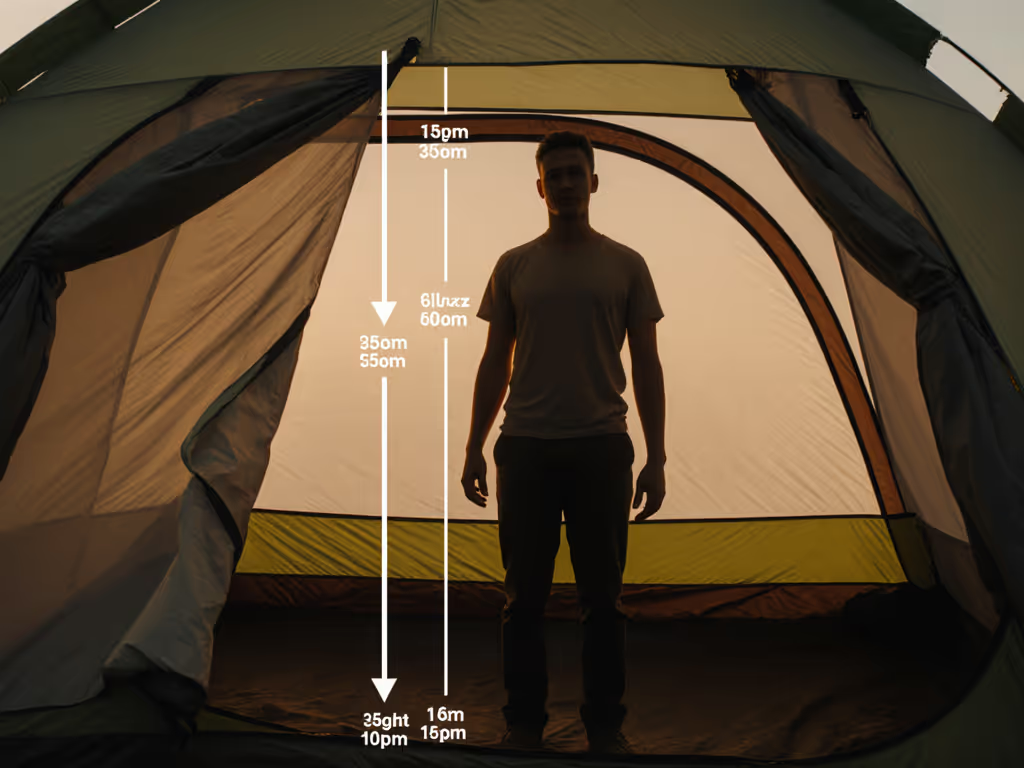
If you're 6'2" or taller, a cabin-style tent is your most reliable bet for consistent usable headroom. The vertical space tents review data confirms this: the Browning Big Horn stands apart at 7'3", a full nine inches taller than most dome competitors. That is not marginal. It is the difference between sitting up straight to change a shirt and rotating awkwardly on your hip.
Cabin designs also maintain height across the entire floor, so you're not trapped sitting upright in the center and hunched at the perimeter. This matters when three people are sleeping in a 6-person cabin tent or when a kid crawls to the far wall and you need to retrieve them without waking everyone.
The trade-off is wind resistance. Cabin tents have larger wall planes and less aerodynamic profiles than tunnel or dome designs, and sustained gusts can flex the poles and walls uncomfortably. Brands like Browning and Coleman mitigate this with robust pole geometry and multiple guy-lines, but windstorm performance remains lower than a well-designed tunnel tent. If long-term support matters, review coverage details in our tent warranty comparison. If you camp in notoriously gusty regions (coastal or high altitude locations), note this limitation in your warranty review and repair plan.
Dome and Hybrid Designs: Flexibility Over Pure Height
The Nemo Aurora Highrise 6 and The North Face Wawona 6 are the standouts in dome-tent headroom, both hitting 6'5" to 6'6". They achieve this through careful frame geometry: a slightly raised center pole and a steep shoulder profile. For a dome tent, 78 inches is exceptional. You'll still feel the walls taper as you move sideways, but sitting upright to read or dress is realistic.
Dome tents excel in wind, the rounded profile sheds gusts rather than catching them flat. They also pack smaller and weigh less than equivalent cabin tents, valuable if your vehicle space is tight or you're hauling the tent on a shoulder-season backpacking trip. The Wawona, in particular, is praised for its enormous vestibule (44.7 sq ft of protected storage), which compounds comfort: muddy boots, a dog, and kids' gear stay outside your sleeping quarters.
Hybrid designs, like the Coleman Cabin Tent with Weatherproof Screen Room, blur the line. It's technically a dome but functions like a modified cabin, with a 6'4" peak and consistent height from front to back (no dramatic shoulder drop). The screen room adds a second "room" for separation or overflow sleeping, which is invaluable for couples with an adolescent or for a family traveling with a dog. Over a 5 to 10 year lifespan, that flexibility often justifies the extra cost.
Headroom Measurement Comparison: What Happens Over Time
Here's where durability and total cost of ownership converge. A well-maintained headroom measurement comparison at year one tells you almost nothing about years three and five.
Fabric relaxation is real. Polyester loses tension over seasons as UV light and moisture cycles weaken the weave. Pole stress (from repeated pitching, temperature swings, and wind flex) introduces micro-compressions that don't reverse. You can lose 1 to 2 inches of effective headroom across a decade, especially in budget tents with thinner poles (7075-T9 aluminum versus 6061-T6, a technical distinction that affects rigidity significantly).
This is why repairability matters. If a pole develops a kink or a seam begins to sag, replacement parts must be accessible and affordable. The Browning Big Horn and Coleman Octagon have robust parts availability through the major retailers; replacement poles, seams, and pole sleeves are straightforward to source. The Nemo Aurora Highrise, by contrast, uses a proprietary pole geometry that complicates after-market fixes. Over 5,000 nights, that difference can mean the tent stays at 77" usable headroom or drops to 74" (small numerically, but noticeable when you're trying to sit cross-legged).
At a neighborhood repair night last spring, we replaced a slider on a Coleman, patched a floor with a kit, and tightened guy-lines on a 12-year-old Browning in under an hour. That tent went from "maybe donate it" to three more solid seasons. When budgets are tight, a $400 tent that you can repair for $40 and two hours is worth twice as much as a $600 tent that has no parts ecosystem. Scuffs are stories, not failures.
6'5+ Tent Comfort: Storage and Entry Angle Matter Too
Headroom is only half the equation. Entry angle and vestibule design profoundly affect daily comfort.
A tall person camping gear setup often includes a sleeping pad (2 to 3 inches thick), a sleeping bag, and possibly a pillow or foam wedge. If the tent's door is angled steeply or positioned low, tall campers wake with their heads or feet pressed against the rainfly (a slow source of damp sleepwear and cold shoulders). The Wawona's full-height door (you enter without ducking) is a tangible advantage; so is the Browning Big Horn's four-window design, which lets tall sleepers angle their pad away from any wall.
Vestibule volume also matters for safety. A cramped vestibule forces you to store gear outside or wedge it into the sleeping area, creating clutter and a tripping hazard in the dark. The Wawona's vestibule (44.7 sq ft) is nearly half the sleeping area, you can actually organize a backpack and a dog bed inside. The Klondike's screen room (98 sq ft total) converts to a second sleeping space, valuable if you're with a partner and kids.
Material Wear and Lifespan: Where Headroom Durability Starts
Once you've identified tents with adequate headroom, the next comparison is material resilience and repairability.
Floor fabrics matter most. A 40-denier polyester floor is budget-friendly and light but punctures or abrades easily (especially under dog claws or sandy sites). A 75-denier floor adds weight (pennies) but doubles lifespan in high-wear scenarios. The Nemo, Wawona, and Browning all use 75+ denier; the Coleman Octagon uses 50 denier, a slight vulnerability for long-term durability.
Pole material and thickness determine whether headroom erodes over time. Get the full trade-offs in our tent pole materials guide. Most modern tents use 7075-T9 aluminum (stiffer, lighter) or 6061-T6 (more durable, slightly heavier). The Browning Big Horn uses premium 7075; its poles are less prone to kinks and compress less under repeated stress. Check product specs carefully, they are rarely listed on retailer websites but are available on the manufacturer's PDF spec sheet.
Zipper quality is understated but critical. A corroded slider or damaged track doesn't reduce headroom, but it makes entry/exit frustrating and can lead to drafts if the zipper won't close fully. Nemo, REI, and The North Face use high-grade nylon zippers (Optilon or YKK) that resist salt spray and dirt; some budget Coleman tents use lower-spec sliders that can jam in the second season. Replacement sliders cost $12 to $25 and take 15 minutes to swap, assuming the brand stocks them. Always verify parts availability before buying.
Total Cost of Ownership: Tall Tent Economics
Entry-Level Cabin Option (e.g., Coleman Octagon 98): $300 to $400. 82" headroom; massive footprint; moderate durability. Likely lifespan: 4 to 6 years with regular use (12 to 15 nights per year). Cost per night: $7 to $12. Repairability: moderate (parts available; some polymer components are less durable). Warranty: limited (2 years, typically).
Mid-Tier Dome/Hybrid (e.g., Coleman Cabin Tent with Screen Room, Nemo Aurora Highrise 6): $600 to $800. 76 to 77" headroom; hybrid geometry or excellent dome profile; good durability. Lifespan: 6 to 9 years. Cost per night: $11 to $18. Repairability: good (established brands; replacement parts available). Warranty: standard to good (2 to 3 years).
Premium Cabin (e.g., Browning Big Horn): $700 to $1000. 7'3" headroom; exceptional durability; excellent repairability. Lifespan: 8 to 12 years. Cost per night: $12 to $18. Repairability: excellent (pole geometry is robust; parts ecosystem is mature). Warranty: good (3 years; manufacturer support is responsive).
Premium Dome/Hybrid (e.g., The North Face Wawona 6, REI Base Camp 6): $900 to $1200. 6'6" and 6'2" respectively; excellent build quality; good-to-excellent repairability. Lifespan: 9 to 12 years. Cost per night: $15 to $22. Repairability: very good (both brands have strong parts support). Warranty: excellent (lifetime for REI Co-op; 3 years + support for North Face).
The premium cabin tent doesn't automatically justify the cost, it depends on frequency of use and how much you value uncompromised headroom. If you camp 15 nights per year and prioritize sitting-up comfort, the Browning's 7'3" over eight years ($12 to $15 per night) is a better financial and practical investment than a budget cabin you'll outgrow or resent by year three.
Wind, Rain, and Storm Readiness
Headroom is worthless if the tent fails in a storm. Tall tents present a subtle challenge: larger wall planes catch more wind, and a higher center of gravity (relative to weight) can flex more in gusts.
Cabin tents are generally robust (the wall and gable geometry is inherently braced) but require careful pitching: guy-lines taut, stakes deep, and the floor pulled to eliminate slack. The Browning Big Horn excels here; its simple geometry and four-corner reinforcement make it forgiving even if one stake is slightly loose. The Coleman Octagon is larger and heavier, requiring more attentiveness in wind, especially if the floor sags.
Dome tents are naturally wind-resistant (the rounded profile sheds force), but the Nemo Aurora Highrise, despite its height, is a competent storm shelter. The Wawona, with its symmetrical frame and high vestibule, is even better. REI Base Camp tents are designed for shoulder-season and 4-season use; their frame geometry and fabric tension are optimized for wind and snow load, worth noting if you camp in variable climates.
Always test your tent's pitch in calm conditions first. Then dial technique with our weather-specific pitching guide. A well-pitched tent of modest quality will outperform a poorly pitched premium tent every time.
Summary and Final Verdict
For solo tall campers or couples with budget flexibility, the Browning Big Horn 5-Person or 8-Person is the most defensible choice: 7'3" of genuine, durable headroom; excellent wind performance; strong parts availability; and a lifespan measured in decades, not seasons. Scuffs are stories, not failures, and this tent can be repaired and re-pitched indefinitely.
For families or those prioritizing flexibility, the Coleman Cabin Tent with Weatherproof Screen Room offers 6'4" of consistent headroom, a screen room that doubles as sleeping or storage, and solid repairability at a lower price point. It's a pragmatic tall-tent choice.
For those balancing headroom with weight and pack-ability, the Nemo Aurora Highrise 6 or The North Face Wawona 6 are exceptional dome tents: 6'5" to 6'6" headroom (rare in domes), excellent build quality, and strong warranty support. The Wawona's vestibule is unmatched for gear organization. Both are viable 8 to 10 year investments if you prioritize durability over maximum height.
For pure value, the Coleman Octagon 98 offers 82" of headroom and 169 square feet of space for $400 to $500. It won't last as long as premium options, but for a novice tall camper testing the waters, it's defensible. Just budget for replacement poles or seams around year five.
In every case, buy with intention: measure your own height (barefoot), lie down inside the tent if you can, and calculate how many nights you'll actually use it. A tent that fits your frame and your timeline is one you'll repair instead of abandoning. That's where longevity begins.
Related Articles