
Tent Seasonality Explained: Match Your Climate
By Priya Nandakumar • 27th Mar
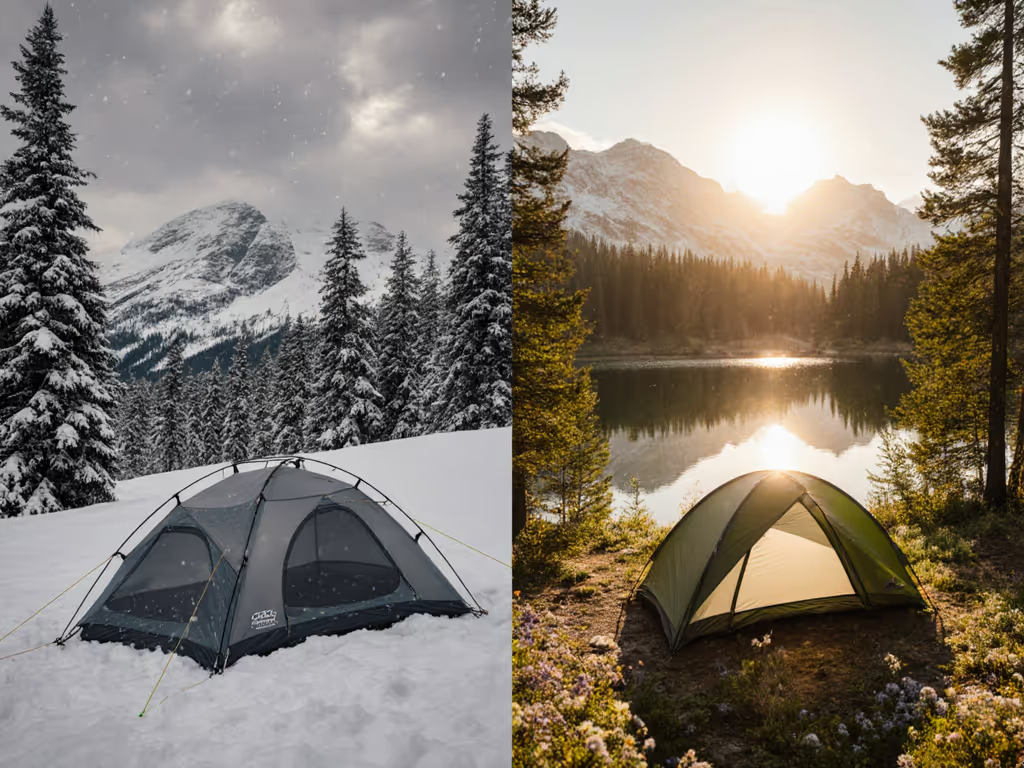
When you're standing in front of two tents at the retailer, one marked "3-season," the other "4-season," the labels feel like they should be straightforward. But tent seasonality is far more nuanced than the names suggest. Season rating interpretation hinges on understanding what weather conditions your tent can actually endure, not which months on a calendar it fits. This distinction becomes critical when you're planning a shoulder-season basecamp trip with your family and dog, or testing whether that winter outing will leave everyone huddled and damp. The difference between the right choice and a misread label often comes down to engineered performance, not marketing. Comfort is engineered long before the first raindrop falls.
What Do Season Ratings Actually Measure?
Season ratings are not official standards. They are manufacturer guidelines that describe the weather resilience of a tent's design, fabric, pole geometry, and ventilation balance. A 3-season tent is built to handle spring, summer, and early autumn conditions: moderate temperatures, rainfall, and variable wind. A 4-season tent adds cold-weather capability, including snow load, sustained high winds, and reduced condensation buildup through design and fabric choices. However, real-world performance depends on how stakes anchor into frozen or saturated ground, how pole deflection absorbs gusts, and whether the fabric and seams stay dry under pressure.
Seasonality is about engineering for specific weather loads, not calendar dates.
During a coastal squall test, I logged pole deflection on a three-pole dome in 45 km/h wind gusts over eight hours. The structure breathed, a rhythmic flex, until one gust spiked to 65 km/h, and the tempo changed. Our cameras caught what stable design looks like: absorbed energy, silent recovery, and no drama. That night, while wind clawed at the fly, stakes held with absorbed tension. Data, not bravado, kept us comfortable. That's the difference season ratings try to communicate: predictable failure modes versus catastrophic ones.
Understanding 3-Season Tents
What They're Built For
A 3-season tent is engineered for conditions you'll encounter most of the year outside harsh winter extremes. The design prioritizes breathability and weight efficiency. Fabrics are typically lighter (around 40-75 denier), pole counts are often minimal (two or three), and ventilation is maximized through mesh panels and adjustable rainfly configurations.
These tents perform reliably in:
- Light to moderate rainfall (up to 25 mm per hour) with effective drainage pathways
- Temperatures between 0°C and 25°C (roughly 32°F to 77°F)
- Sustained wind up to 40-50 km/h (25-31 mph), depending on stake pattern and guy-line geometry
- Minimal snow (a dusting, not accumulation)
Why They Matter for Shoulder-Season Camping
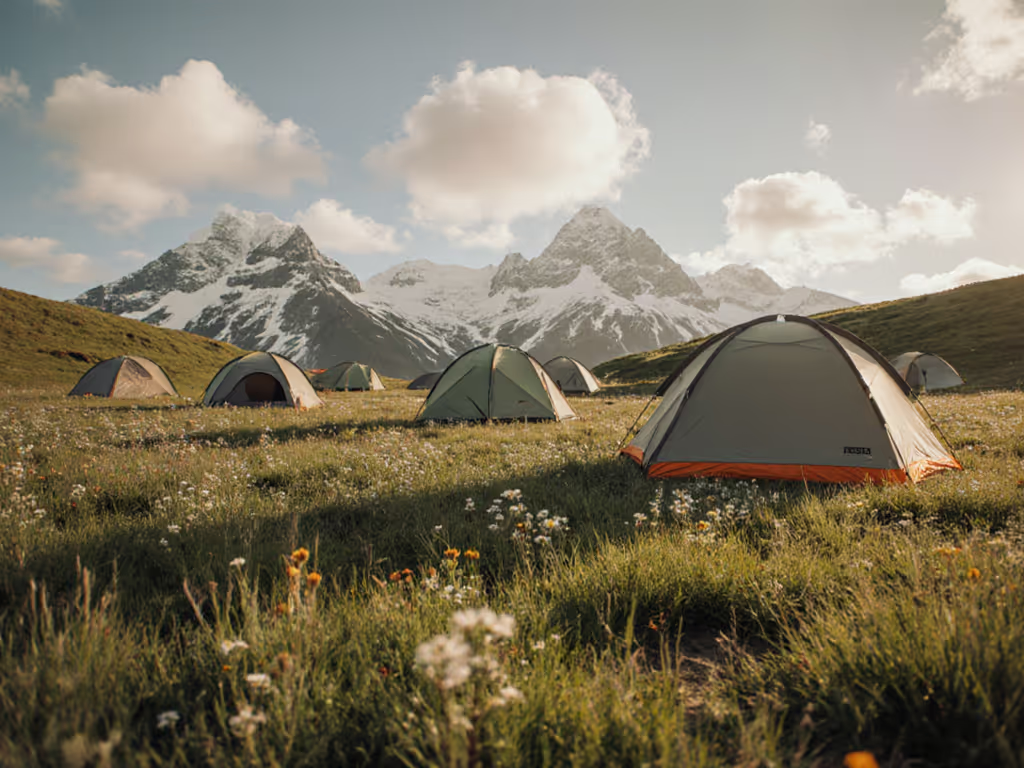
For families with weekend trips to state parks in late April or early September, a 3-season tent strikes the best balance. They weigh less than 4-season alternatives (critical if you're hiking with kids or loading a small car), and they breathe well, which means less condensation on cool nights when you're venting moisture from body heat and breath. For moisture control strategies that actually work, see our tent condensation guide. The trade-off: reduced wind bracing and thinner fabrics mean they're vulnerable to ice-load stress and heavy snow.
Understanding 4-Season Tents
What They're Built For
A 4-season tent adds structural reinforcement to endure winter extremes. Pole counts increase (often four or more), creating a stronger frame geometry that resists snow loads and sustained gusts. Fabrics are thicker (60-100 denier or more), and the rainfly extends lower or fully around the tent, minimizing ventilation but trapping warmth and shedding wind-driven precipitation. Internally, condensation is managed through strategic mesh panels and fabric choice rather than open airflow. If you're evaluating models for true winter use, our best 4-season tents guide benchmarks storm performance.
These tents perform in:
- Heavy rainfall and snow (snow loads 15-30 cm or more, depending on design)
- Temperatures from -10°C to 15°C (14°F to 59°F)
- Strong, sustained wind up to 60+ km/h (37+ mph)
- Extended shoulder seasons in alpine or high-latitude regions
The Trade-Offs
Four-season tents are heavier, more complex to pitch in poor visibility, and can trap moisture if ventilation is misconfigured. They're overkill for most summer family camping trips. If you're basecamp car camping in winter or running a remote expedition, they're essential. For casual winter getaways in temperate regions with reliable access and mellow conditions, they may be unnecessarily burdensome.
How to Determine Tent Seasonality for Your Climate
Step 1: Know Your Trip Profile
Define the conditions you'll actually face, not just the season name: For location-specific picks, see our region-optimized tent recommendations.
- Expected temperature range (minimum and typical overnight low)
- Rainfall probability and intensity (light showers vs. steady downpour)
- Wind exposure (sheltered valley vs. ridge line)
- Snow likelihood (flurries vs. 30 cm accumulation)
- Trip duration (one night vs. multi-day basecamp)
Step 2: Cross-Reference Real-World Data
Manufacturer specs are starting points, but test reports and user logs reveal failure modes. Look for documented wind-speed thresholds where the tent loses structural integrity, not marketing claims. Independent testing under repeatable conditions (pole deflection measured in millimeters, rain simulation in ml/m2, fabric stress under load) gives you usable risk thresholds. Retail reviews often mention condensation patterns, drafts at seams, and stake hold on various ground types.
Step 3: Assess Your Tolerance for Compromise
No tent is optimal for all seasons. Ask:
- Can I tolerate higher condensation in exchange for lighter weight and packability?
- Will I manage comfort through layering and ventilation adjustments, or do I need passive thermal control?
- How much wind speed is acceptable before I abandon the trip?
- Are muddy feet and pet claws priorities (vestibule size and floor durability)?
Common Misconceptions About Season Ratings
"A 4-Season Tent Is Just Better"
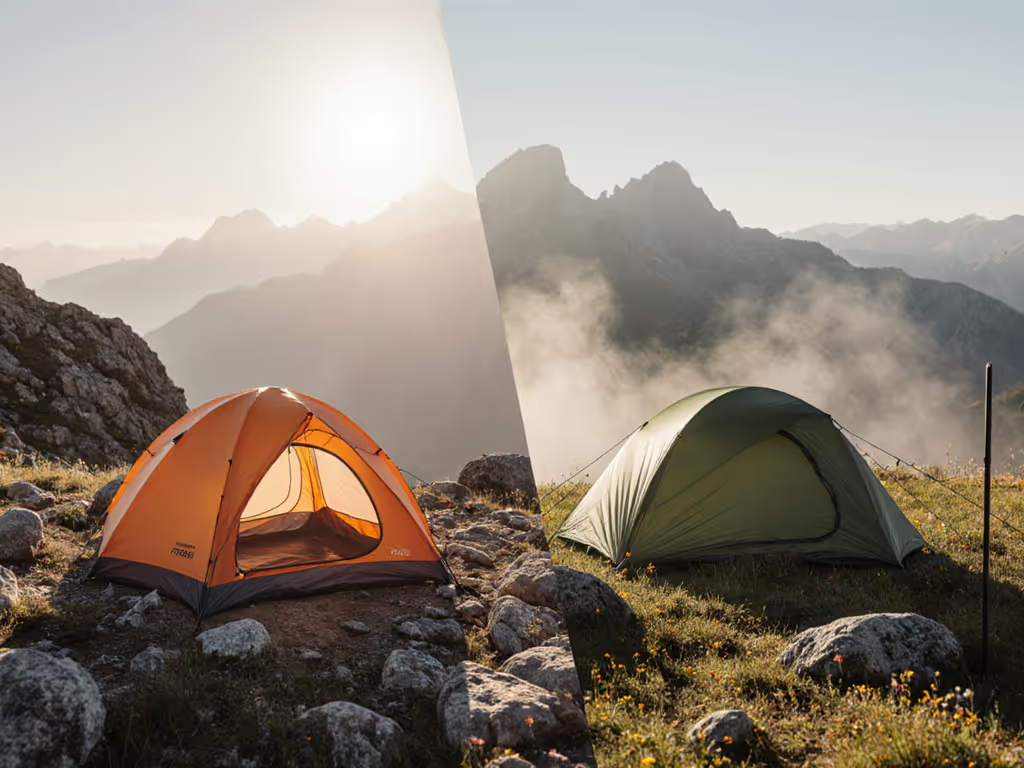
No. A 4-season tent is more resistant to extreme conditions but heavier, more complex to set up, and often too warm and clammy in summer. Choosing based on the "highest" rating is like buying a winter coat for beach days. Match the tool to the job.
"The Label Guarantees Performance"
Season ratings are guidelines, not guarantees. A poorly staked 3-season tent fails faster than a properly anchored one in identical wind. Pole quality, fabric seam integrity, and your assembly matter as much as the design rating.
"Winter Camping Requires a 4-Season Tent"
Not always. Some winter trips, car-based and in sheltered locations with moderate conditions, can work with a well-ventilated 3-season tent if you manage condensation through cracking vents. Conversely, a poorly designed 4-season tent with marginal ventilation leaves you clammy. Design beats label.
Matching Seasonality to Your Real Trips
For most families in North America with suburban or urban bases and weekend access to parks, 2-person, 4-season tents are rarely necessary unless you're planning high-altitude or true-winter basecamp trips. A quality 3-season tent serves 90% of trips: spring hikes, summer family camps, early-fall getaways, and even shoulder-season outings with smart setup and layer management.
The real measure of seasonal tent performance is how your specific family sleeps. If condensation drips on sleeping bags, it's not stable enough for your conditions, no matter the label. If wind buffets the tent all night, sleep suffers. If you wake cold and clammy, ventilation isn't right for the temperature swing. These are engineered problems with engineered solutions: stake geometry, pole bracing, fabric choice, and pitch angle all affect how a tent performs in real weather. To lower weather exposure before you even pitch, use our campsite selection guide to find windbreaks and drainages.
The Data-Driven Approach to Tent Selection
When evaluating a tent's seasonality fit, prioritize:
- Documented performance thresholds - wind speeds and rain rates at which the tent loses integrity
- Pole deflection under load - measured in millimeters, not vague claims
- Ground anchoring geometry - stake angles and guy-line tension required for stability
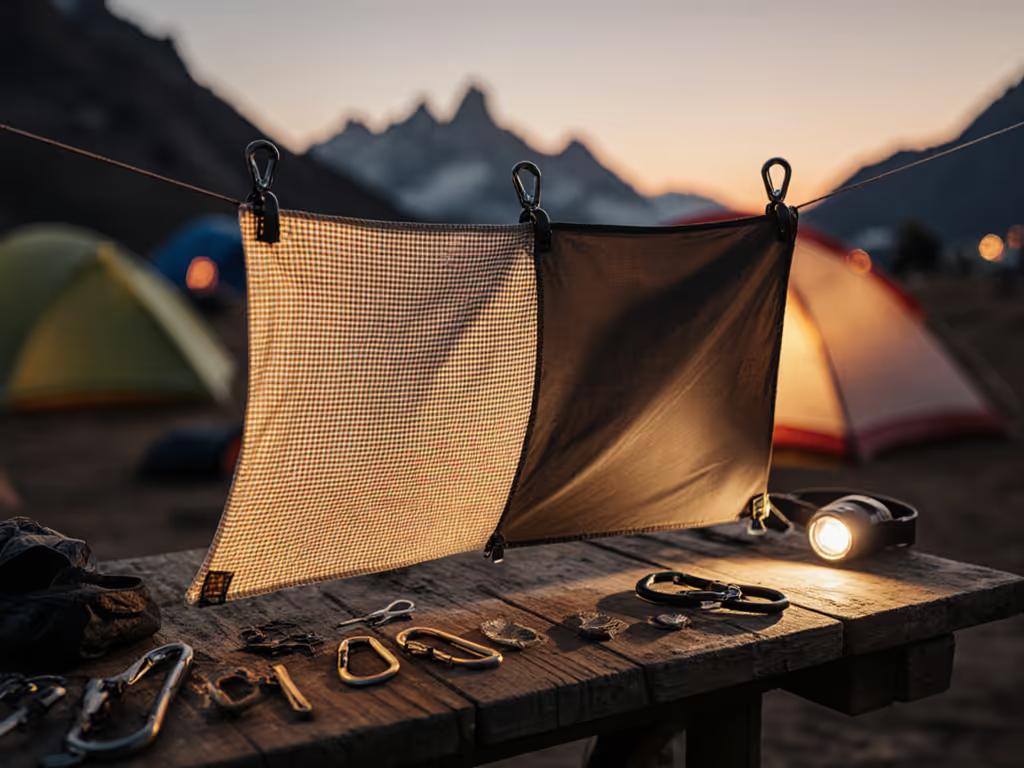
- Fabric and seam quality - PU coating durability, thread count, and seam-sealing standards
- Ventilation balance - how the tent manages condensation at different temperatures
When you align these measurable traits with your actual trip conditions, not seasonal stereotypes, you get stability you can sleep through. That's the comfort difference between a tent that matches your needs and one you've outgrown after one restless night.
Further Exploration
Understanding tent seasonality is the foundation, but matching it to your specific context, your climate, your group, and your risk tolerance, requires digging into design details. Consider spending time with independent test data, watching setup videos under real weather, and reading detailed user logs from campers in your region. Talk to local outfitters about how people actually use these tents in your area, not how they're marketed. The goal is confidence: walking into a trip knowing your tent will shelter you predictably, not leaving it to chance.
Related Articles