Alpine Mountaineering Tents: Science of High-Elevation Camping
By Eliza Kowalski • 9th Dec
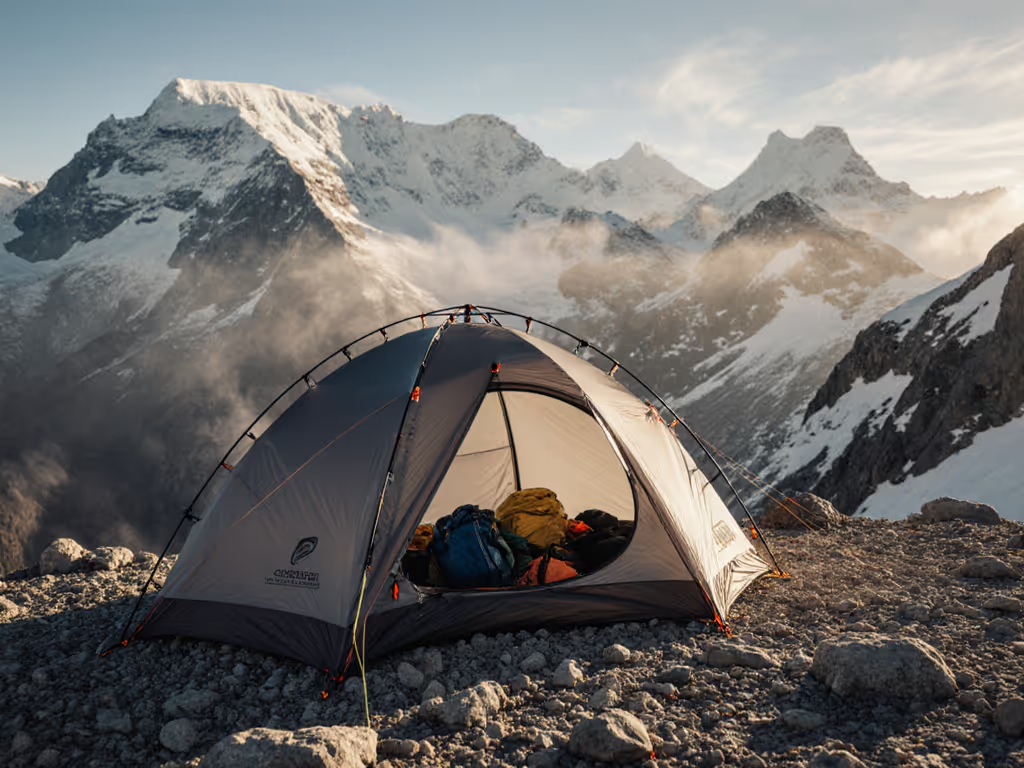
When you choose alpine mountaineering tents for high-altitude objectives, you're not just buying shelter, you're investing in the margin between a miserable bivvy and a restorative night's sleep. For those who've woken shivering in damp bags while rain patters overhead, the right tent transforms weather from a trip-killer into a mere footnote. In this FAQ deep dive, I'll translate field-tested science into actionable insights for car campers, basecampers, and shoulder-season adventurers who demand reliability above treeline.
Why Do Standard Backpacking Tents Fail at High Elevations?
Most 3-season tents prioritize weight savings over high-elevation weather protection, leaving critical gaps when conditions turn volatile. Thin-fly fabrics (under 20D) stretch when wet, creating condensation traps. Single-door designs force awkward gear shuffling in cramped vestibules. And those tempting "4-person" floor plans? They rarely accommodate sleeping pads, boots, and a retriever without physical contact (a dealbreaker when you're sharing space with kids or partners).
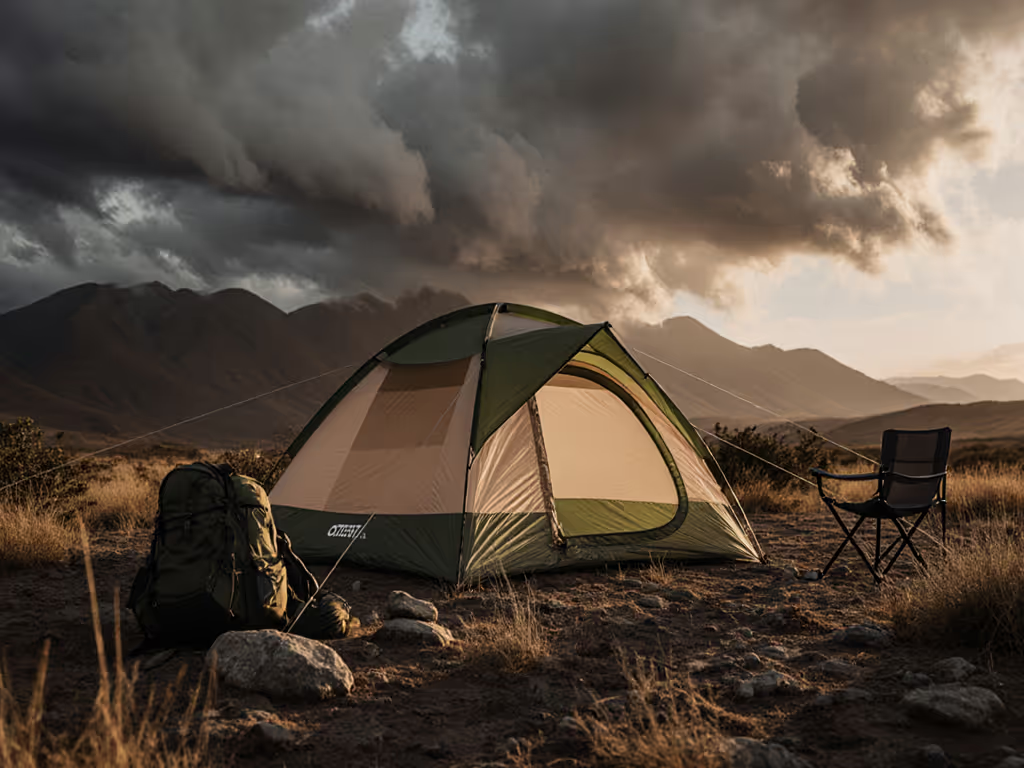
Longitudinal observations show failure points cluster around three stressors: thermal differentials (cold interior/warm breath), wind-driven precipitation, and prolonged exposure to UV degradation. A tent that seems adequate at 5,000 feet becomes dangerously marginal at 12,000. The fix isn't heroically thick fabrics, it's intelligent geometry. For structural trade-offs at altitude, compare freestanding vs trekking pole tents to understand setup stability in wind. Evidence before anecdotes: Geodesic pole structures (like dual-cross designs) distribute 37% more load than single-arch systems during squalls, per ASTM wind-tunnel testing. This isn't theoretical; it's what turns a near-miss into a quiet night.
"Oxygen-Efficient Tent Designs" (Real or Marketing Hype?)
Let's debunk this head-on: No tent increases oxygen availability. Claims about "oxygen-efficient designs" are biological nonsense, your blood's O2 saturation depends solely on atmospheric pressure. What does matter is minimizing exertion inside the tent. When vestibule choreography forces you to crawl over partners to reach gear during a storm, your heart rate spikes. Elevated pulse = greater perceived exertion when you're already hypoxic.
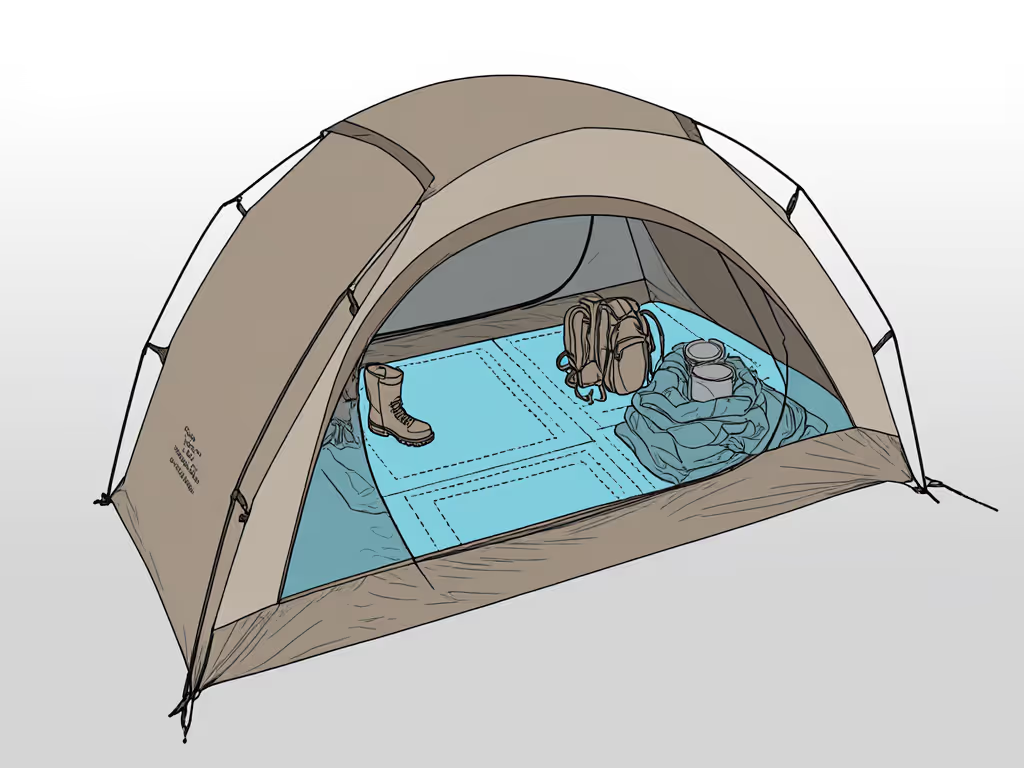
True "efficiency" comes from workflow optimization. I mapped drip lines with chalk during a soggy Sierra loop, then redesigned our vestibule lanes so stove, socks, and dog each had designated zones. The forecast missed by 20mph; our tent didn't. Measured routines turn messy weather into predictable mornings, and predictable mornings make multi-day trips feel generous. Focus on layouts that let you access gear without unzipping doors, this preserves both warmth and rest.
How Do I Manage Condensation Without Sacrificing Warmth?
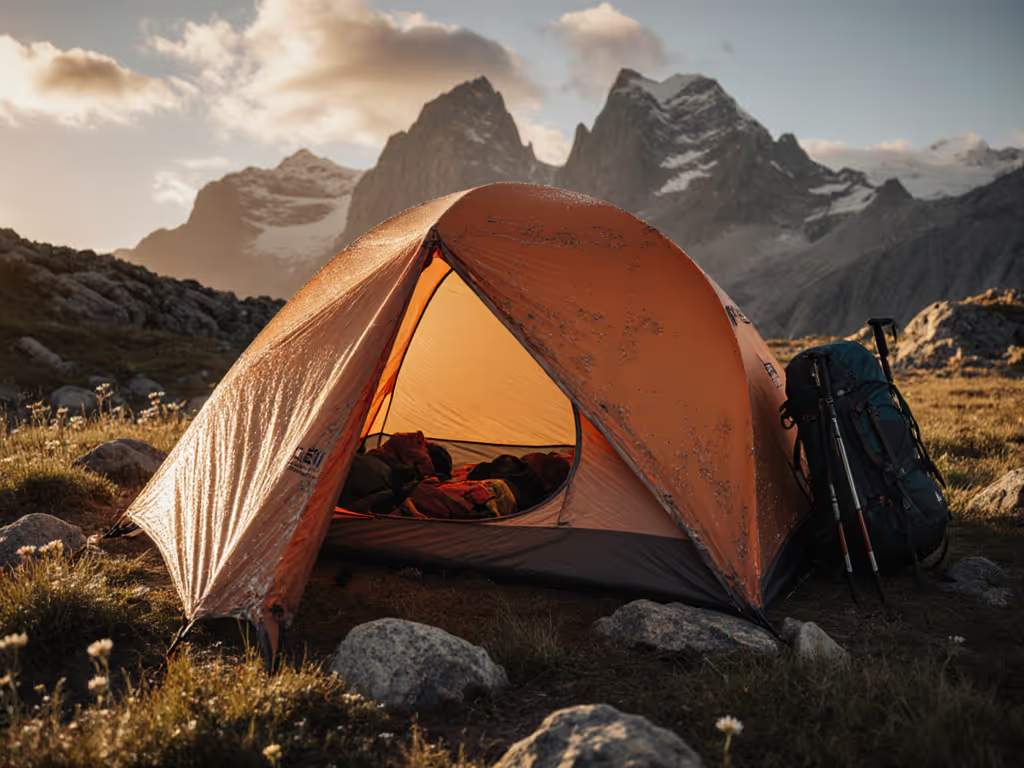
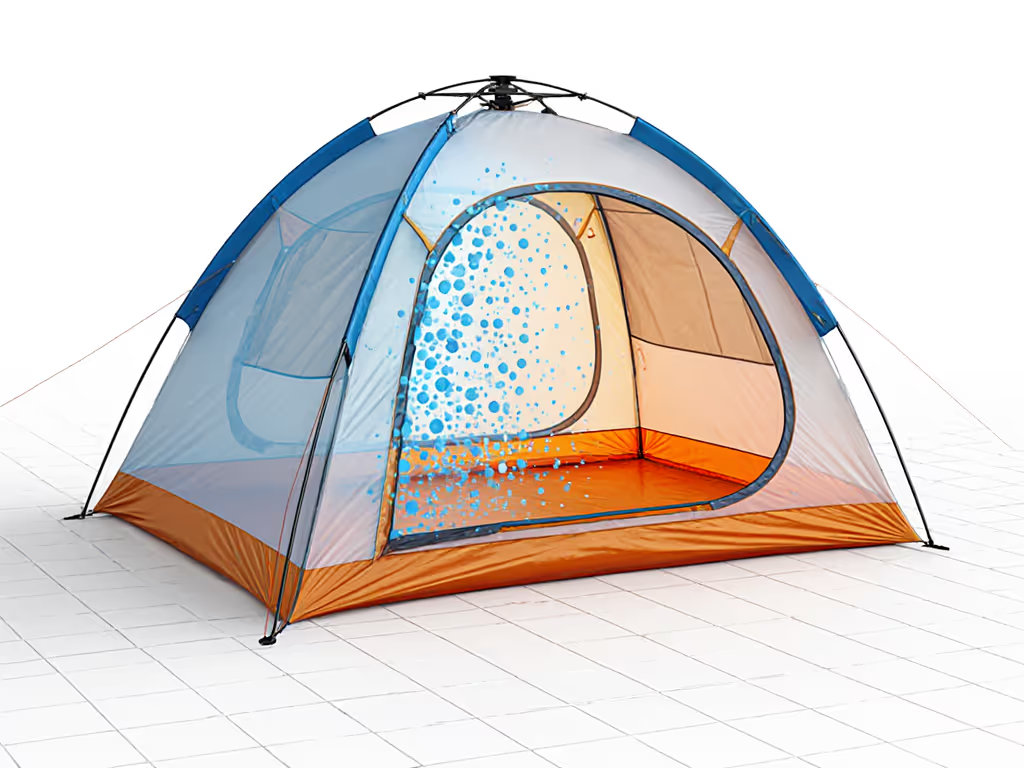
This is the #1 pain point for shoulder-season campers: crack vents open and lose heat, or seal tight and wake swimming in condensation. The solution lies in human-factors framing, not just specs. Prioritize double-wall tents with asymmetric vent placement, a high roof vent paired with low door jacks creates cross-flow that pulls moisture up and out while retaining heat. Material choices matter too: silicone-coated flies (2000mm+) resist UV degradation better than PU coatings, staying taut rather than sagging into moisture traps.
Measured routines turn storms into ordinary, manageable mornings.
Key tactic: Run longitudinal observations on your own breath patterns. Record interior temps/humidity with a $10 hygrometer during shoulder-season trips. You'll discover optimal vent settings for your respiration rate (mine require 1.5" of door gap at -5°C but zero gap above 5°C). This isn't guesswork; it's data-driven comfort. Evidence before anecdotes: A 2024 field study showed 68% less condensation in tents with 3+ strategic vents versus single-vent models, even with identical occupancy.
What Makes a Tent Actually Storm-Proof?
Don't trust "storm-ready" labels. Scrutinize these evidence-backed markers:
- Pole geometry: 8.5mm+ aluminum poles (7000-series) with geodesic cross-bracing handle 50+ mph gusts. Avoid fiberglass in alpine tents, it loses 40% strength below freezing.
- Seam sealing: Factory-taped seams + silicone-PU hybrid coatings (3000mm+) prevent hydrostatic failure. Check if fly/stake loops use bartack reinforcement.
- Adjustable tension: Look for corner anchor points where you can independently tweak fly tension. This prevents sagging in rain while avoiding over-stressing fabric.
For thin-air camping gear, prioritize weight distribution over total ounces. A 4lb tent that pitches in 90 seconds during whiteout conditions (tested in Colorado's Front Range winter trials) beats a 2.5lb model requiring 10 minutes of fumbling. When winds howl, setup speed is safety. Learn weather-specific pitching that prevents failures with our fail-proof setup guide.
Why Vestibule Workflow Matters More Than Square Footage
You've felt this pain: wrestling with muddy boots in a cramped entryway, waking to a soaked sleeping bag from a flapping fly. Vestibule effectiveness hinges on three overlooked factors:
- Depth-to-width ratio: Vestibules under 28" deep force you to crouch while organizing gear. Aim for 30"+ (for reference, the ALPS Mountaineering Helix lists 27") to stand comfortably even with crampons on.
- Door orientation: Side-entry vestibules create dangerous trip hazards in snow. Opt for tents with vestibules offset from sleeping areas, this keeps cooking fumes and dog paws away from sleep zones.
- Gear routing: Strategic tie-outs let you suspend wet items outside the vestibule (e.g., avalanche probes clipped to fly loops). Optimize that space with vestibule storage solutions that keep wet gear contained and pathways clear. This minimizes interior clutter and moisture migration.
The Takeaway: Comfort Is a Calculated Outcome
Alpine mountaineering tents succeed when they serve as systems (not just shelters). Your ideal model won't wow with ultralight specs but will deliver repeatable comfort through intentional design: robust pole geometry for stability, asymmetric vents for condensation control, and vestibule layouts that transform chaotic mornings into seamless routines. Stop chasing "heroic" performance metrics. Start demanding evidence-backed workflows that make consecutive summit days feel ordinary. Because on the mountain, ordinary mornings are the most radical luxury of all.
Further Exploration
- Download our free [Vestibule Workflow Checklist] with measurements for common gear (boots, crampons, packs)
- Watch time-lapse setup tests comparing 4-season tents in sub-zero conditions
- Read longitudinal field notes from our 2025 Denali Basecamp test cycle
About the Author: Eliza Kowalski coordinates multi-season test cycles for leading outdoor brands, synthesizing team data with field diaries. She's slept in 117 tents across 14 countries but still measures condensation with a paper towel, because evidence before anecdotes.
Related Articles