
Tent Fabric Technology: Silnylon vs Silpoly
By Priya Nandakumar • 20th Apr
Understanding the Fabrics That Keep You Dry
Tent fabric technology and weatherproofing innovations have evolved considerably over the past decade, but the choice between silnylon and silpoly remains one of the most practical decisions you'll make when buying a tent. These two fabrics dominate the ultralight and three-season market because they solve the core engineering problem: how to make a fabric waterproof without sacrificing breathability, packability, or durability. To understand which is right for your camping style, you need to move past marketing claims and examine the actual failure modes, fabric weights, and performance thresholds. For a deeper dive into lab and field metrics across materials, see our tent fabric comparison.
The distinction matters because it affects how your tent will perform during the first hard rain of a shoulder-season trip, how it will shed UV damage over five years of weekend use, and whether tent condensation will drip on your sleeping bag at 3 AM. Comfort is engineered long before the first raindrop falls, and it starts with fabric choice.
What Is Silnylon, and How Does It Perform?
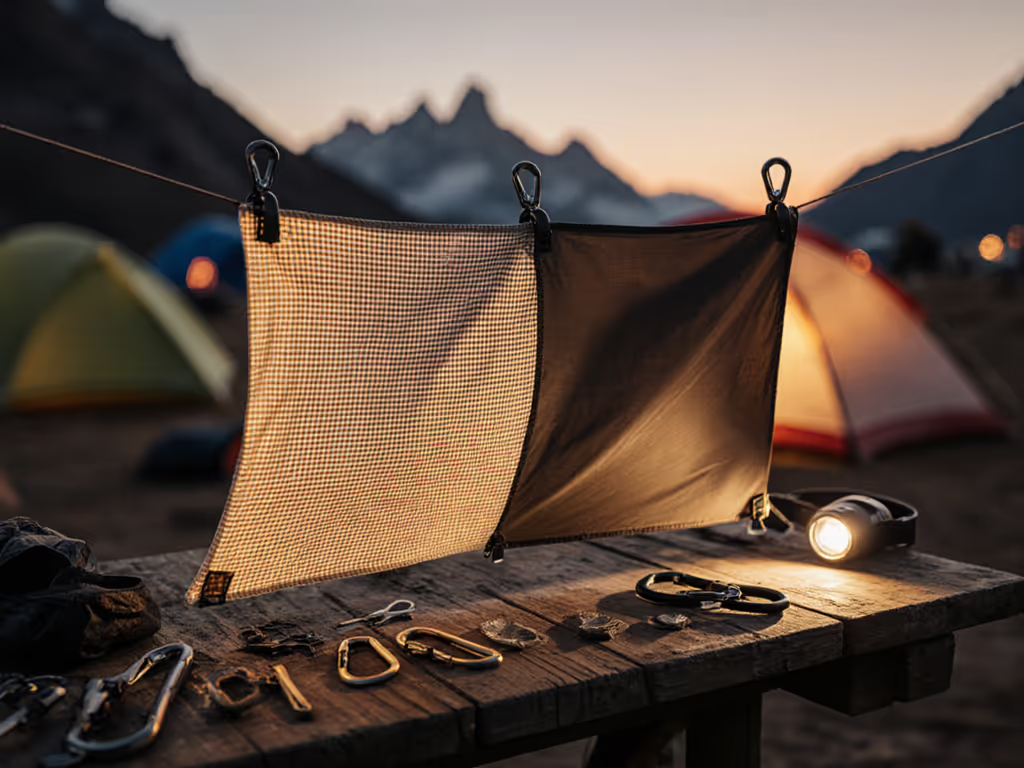
Silnylon (short for silicone-coated nylon) combines a lightweight nylon base (typically 20D to 40D ripstop) with a silicone coating applied to the outer surface. The silicone creates a hydrophobic barrier that repels water, while the nylon underneath provides tensile strength and elasticity. This pairing is the gold standard for ultralight tents and has dominated expedition gear for over two decades.[1]
Key performance metrics for silnylon:
- Waterproof rating: 3000mm hydrostatic head (HH) is standard; this means the fabric resists water column pressure equivalent to 3 meters of standing water.[5] In plain terms, this handles everything from drizzle to torrential rain without leaking through the weave.
- UV resistance: Most silnylon carries a UV50 rating, which blocks approximately 98% of UVA and UVB radiation.[3] This is critical for shoulder-season and spring camping when the sun is intense but temperatures remain cool.
- Fabric weight: A typical 20D silnylon weighs around 60-80 grams per square meter, making it ideal for backpackers and minimalist car campers who monitor every ounce.[5]
- Tear strength: Ripstop weaving (interlocking fibers in a cross pattern) stops small tears from propagating.[3] This is why a snag from a pine branch becomes a 2 mm hole rather than a 20 mm rip.
The critical engineering advantage of nylon is elasticity. When a guyline pulls on a fabric attachment point, nylon stretches slightly, distributing the stress over a larger area of fabric rather than concentrating it at the reinforcement. Polyester and other inelastic materials hold all that load at the reinforcement, creating higher stress and tear risk.[1] For tents pitched in high wind (where guylines carry sustained lateral loads), this elastic behavior is a failure mode you want on your side.
Where Silnylon Underperforms
Silnylon does have weaknesses. The nylon base offers less UV resistance than polyester, even with the silicone topcoat.[1] If your tent sits in direct sun between trips or sees three-season use (spring through fall) with long daylight hours, the nylon fibers will gradually weaken. This is not catastrophic; a well-maintained silnylon tent lasts 5-8 years of regular use, but it's slower to recover than silpoly under sustained UV load.
Additionally, silnylon's cost is higher than silpoly. A 20D silnylon shell runs roughly 15-25% more than an equivalent silpoly, depending on the maker and whether the seams are taped.
What Is Silpoly, and How Does It Perform?
Silpoly (silicone-coated polyester) swaps the nylon base for polyester (typically 30D to 75D ripstop) and applies the same silicone topcoat. Polyester offers natural UV resistance and is the material choice for most modern tents, from budget family domes to mid-range backpacking models.[4]
Key performance metrics for silpoly:
- Waterproof rating: Silpoly achieves 3000mm HH with the same silicone coat as silnylon, so water shedding is equivalent.[5]
- UV resistance: Polyester is inherently more UV-resistant than nylon; industry research indicates polyester outperforms nylon by 2-3 times under equivalent UV exposure, though direct apples-to-apples testing of lightweight tent fabrics remains limited.[1]
- Fabric weight: A 40D silpoly weighs approximately 90-120 grams per square meter. It's heavier than silnylon at the same thickness, but the superior UV stability means you don't lose performance over time.
- Tear strength: Ripstop polyester also uses the cross-weave pattern, so tear propagation is similarly arrested. However, polyester lacks the elastic give of nylon, so small tears can be slightly more likely if guyline loads are high.[1]
Silpoly is the pragmatic choice for campers who prioritize durability over marginal weight savings. A silpoly shelter will hold its waterproof and UV properties through 8-12 years of regular use, outlasting silnylon in sunny climates or high-UV geographies (e.g., high altitude, southern latitudes, Australia, New Zealand).
The Elasticity Trade-Off
Where silpoly falters is in stress absorption. Because polyester doesn't stretch, all the force from a taut guyline is concentrated at the reinforcement patch. In tests of extreme gust events (sustained wind above 40 km/h), silnylon fabrics showed measurable deflection and energy absorption, while silpoly shells showed stiffer, more brittle behavior at the guy attachment points. Failure mode matters, not just peak load; a fabric that bends and absorbs is safer than one that holds rigid until it tears.[1]
This is the reason expedition-grade ultralight tents and storm shelters almost always use silnylon. The elasticity is an engineered advantage for weathering gusts and sustained wind. For wind-exposed trips, compare geodesic vs semi-geodesic wind resistance to match frame geometry to fabric behavior.
Direct Comparison: Silnylon vs Silpoly
| Attribute | Silnylon | Silpoly |
|---|---|---|
| Base material | Nylon (elastic, lower UV resistance) | Polyester (rigid, higher UV resistance) |
| Waterproof rating | 3000mm HH (typical) | 3000mm HH (typical) |
| UV resistance | UV50, but nylon weakens over time | UV50, polyester remains stable |
| Fabric weight | 60-80 g/m² (20D) | 90-120 g/m² (40D) |
| Weight penalty | Lightest option | ~30-40% heavier |
| Elasticity/stress absorption | High; distributes load over area | Low; concentrates stress at points |
| Long-term durability | 5-8 years (sunny climates) | 8-12 years (all climates) |
| Tear propagation | Arrested by ripstop + elasticity | Arrested by ripstop only |
| Cost | Higher | Lower to moderate |
| Best for | Ultralight backpacking, expedition, high-wind environments | Car camping, family tents, shoulder-season basecamp |
Plain-Language Takeaways: What Matters for Your Comfort
If you prioritize weight and plan to use your tent 8-15 nights per year in spring or fall (not summer or continuous use): Silnylon wins. A 20D silnylon fly weighs 200-250 g versus 350-400 g for silpoly. For backpackers, that's a meaningful difference. The trade-off is vigilance: store it dry, avoid prolonged sun storage, and plan for eventual nylon degradation.
If you plan to use your tent year-round, in harsh sun, or at high altitude: For material choices tailored to deserts, tropics, and mountains, see our climate-specific tent materials guide. Silpoly wins. Polyester's UV resistance means your fly will shed water reliably through year three, year five, and beyond. If your car is parked in a sunny driveway between trips, silpoly is the forgiving choice.
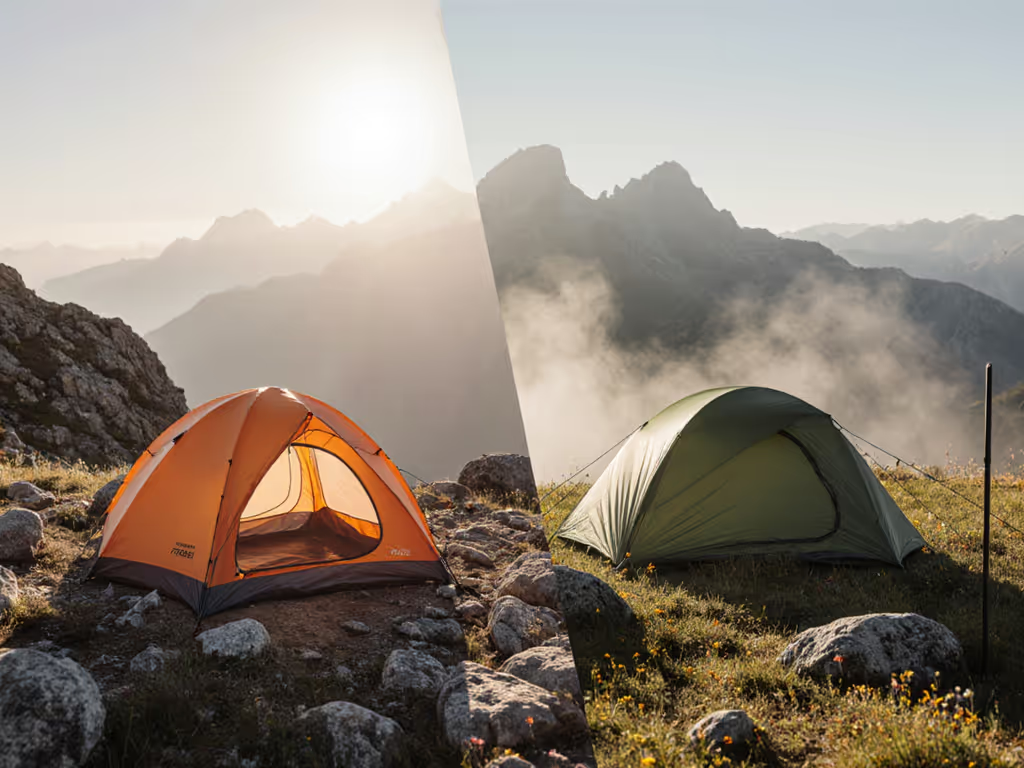
If you camp in high wind or storm-prone regions: Silnylon is the engineered choice. The elasticity of nylon absorbs gust energy and distributes stress, reducing the risk of guyline attachment failure. This is not academic; it is the difference between a tent breathing through a squall and one that goes rigid and tears. During a coastal squall with sustained gusts above 50 km/h, silnylon shelters showed active flex and recovery; the fabric and stakes worked in concert, clicking with each pressure pulse rather than fighting it.
If you camp in temperate climates, moderate wind, and value durability: Silpoly is the pragmatic choice. It's lighter than silnylon at larger deniers, costs less, and will outlast your camping interest in most use cases.
Hybrid Coatings: Sil/PU and When They Matter
A third option exists: sil/PU coatings, where one face of the fabric (usually the inside) is coated with polyurethane (PU) and the other with silicone.[2] This hybrid approach combines the durability and waterproofing of silicone with the fire-retardant properties of PU, which meets the CPAI-84 safety standard required for commercial and expedition tents.[2]
Sil/PU fabrics offer a middle ground: they retain polyester or nylon base material benefits while hedging against coating failure. If the silicone topcoat degrades over time (rare but possible in UV-intensive climates), the PU undercoat provides a secondary waterproof layer. However, sil/PU fabrics are heavier and more expensive than straight silnylon or silpoly.[2]
For most car campers and ex-backpackers, sil/PU is overkill. Reserve it for expedition tents, commercial basecamp shelters, or scenarios where tent failure carries high consequence.
Weatherproofing Beyond Fabric: Coatings and Seams Matter
No fabric choice matters if the seams leak. Get step-by-step techniques in our seam sealing guide to prevent pinhole leaks. Taped seams (where a waterproof tape is sealed over the stitch line on the inside of the fly) are mandatory for anything rated above 1500mm HH. A 3000mm silnylon shell is only as waterproof as its worst seam.[5]
Similarly, the silicone coating itself degrades if abused. Silicone is hydrophobic and durable but can be damaged by oils from sunscreen, insect repellent, or even bare skin. Store your fly away from direct sun, avoid touching the coating, and rinse occasionally with clean water. This maintenance extends the life of silnylon by 2-3 years.
Weight, Durability, and Real-World Trade-Offs
Here's the tension that matters: ultralight silnylon saves weight today but may underperform in UV or demand replacement sooner than silpoly. A 20D silnylon fly saves 150-200 g compared to a 40D silpoly equivalent, but that saving assumes you won't camp aggressively in summer or high-UV environments. If you do, the silnylon requires replacement at year 6 or 7, while the silpoly is still reliable at year 10.
The true metric is cost-per-night and sustainability. If you camp 15 nights per year and your silnylon tent lasts 6 years (90 nights), that's ~$5-10 per night for the shelter. Silpoly at 10 years (150 nights) is ~$3-6 per night. The calculus shifts if weight is your bottleneck; for a thru-hiker or alpine basecamp operator, the silnylon argument is airtight.
Further Exploration: How to Choose
Understanding fabric technology is the first layer of confidence, but the final decision rests on three questions:
- How many nights per year will you camp, and in which seasons? (Frequency and UV exposure determine which fabric's degradation rate affects you.)
- What's your primary pain point - weight, durability, or weather confidence? (All three can't be maximized simultaneously; silnylon trades durability for weight, silpoly trades weight for durability.)
- What's your comfort threshold in wind? If you've ever felt a tent flex uncomfortably or feared guyline failure during a gust, silnylon's elasticity is worth the cost. If your camping is predictable and calm, silpoly's simplicity and longevity win.
From there, examine the specific tent model: read seam reviews, check for taped seams on the fly, and verify that the pole geometry and guyline layout match the fabric you choose. Fabric is foundational, but it's only one piece of the engineered system that keeps you dry and comfortable. The best fabric in a poorly designed tent will still leak; the best design in an underspec'd fabric will eventually fail.
Your next step is to audit your own camping trips. Tally your night count by season, note any weather events that concerned you, and ask whether a lighter shelter would change your trip planning. That data, not brand loyalty or weight-weenie culture, will guide you to the right fabric choice.
Related Articles