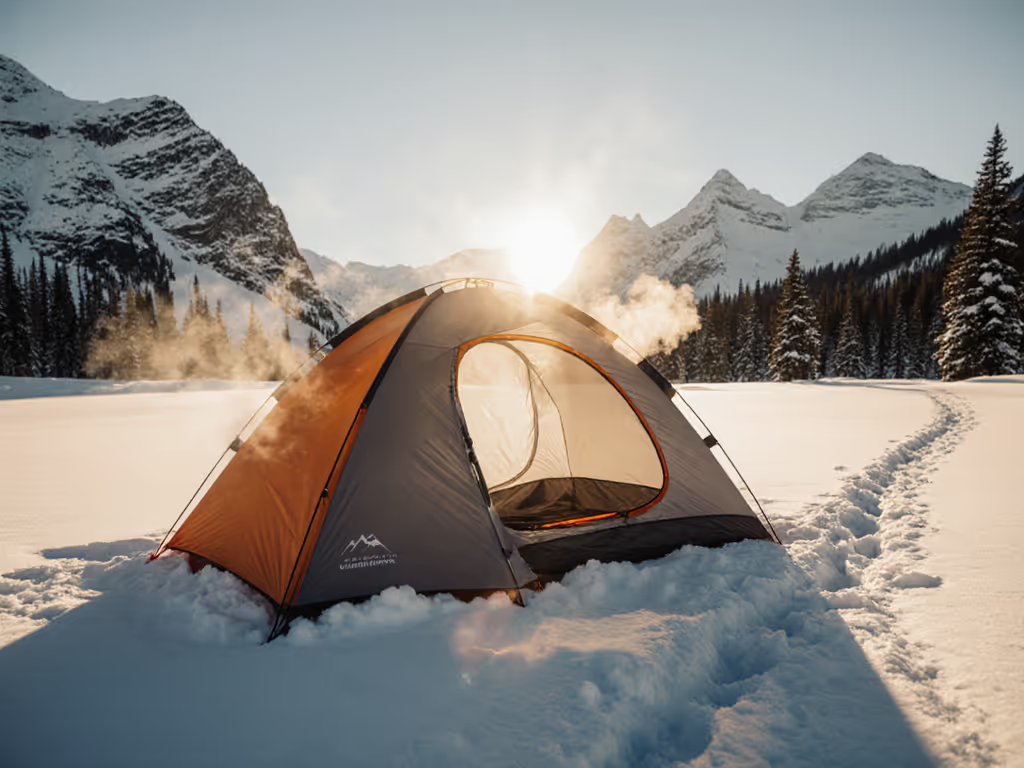
High-Altitude Tent Performance: Science Of Comfort And Safety
By Eliza Kowalski • 21st May
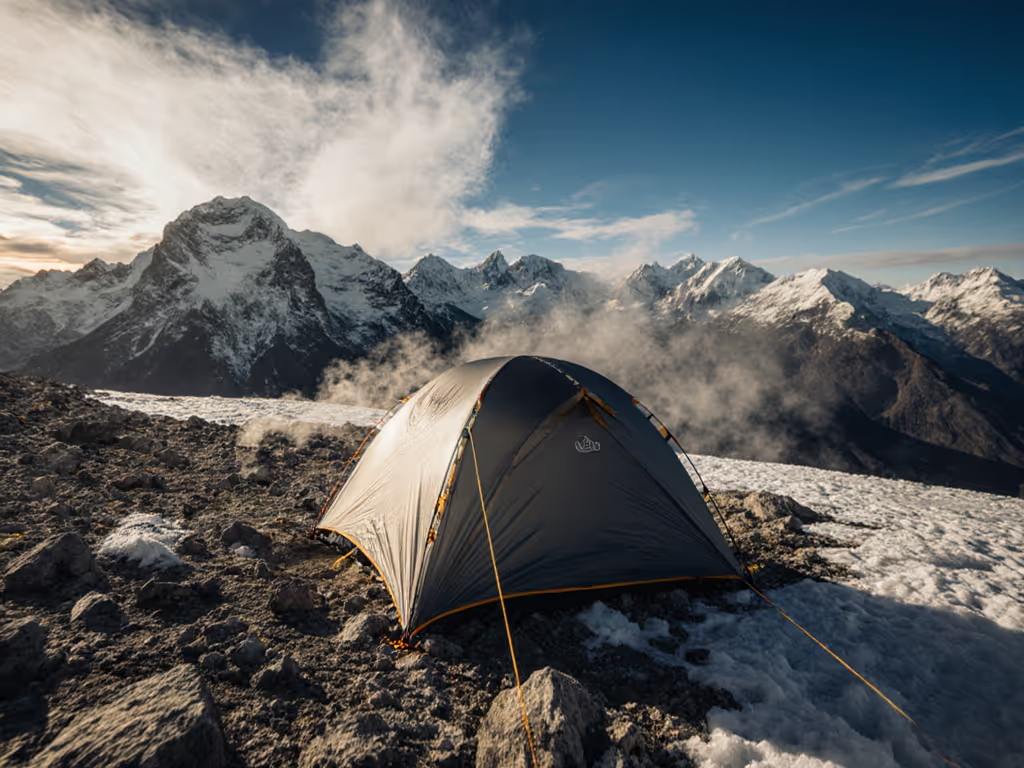
When you move from valley campgrounds to thinner air, high-altitude tent performance stops being vague marketing and turns into real, felt differences in warmth, sleep, and safety. This is where mountain camping tent science - not just brand claims - should guide your choices and routines.
Below is a FAQ-style deep dive aimed at campers who care about real sleep, reliable shelter, and keeping partners, kids, and dogs comfortable when the trailhead climbs above the lowlands.
What actually changes at altitude that affects my tent?
Three big shifts matter most:
- Thinner air & pressure
- Air holds less heat, so the temperature drops faster after sunset.
- Wind chill bites harder because there is less dense air buffering your tent walls.
- Greater temperature swings
- Clear mountain nights radiate heat to the sky quickly.
- You might see a 20-30°F (11-17°C) drop between late afternoon and midnight.
- More UV and more wind
- UV intensity increases with elevation, accelerating altitude effects on tent materials - especially fly fabrics and seam coatings.
- Higher ridges and passes are less sheltered, so gusts hit harder and more often.
The result: the same tent that feels "fine" at a forested 4,000 ft car camp can feel drafty, noisy, and fragile at 9,000 ft in an exposed basin. For a deeper high-elevation primer on gear and setup trade-offs, see our alpine tent selection guide.
Measured routines turn storms into ordinary, manageable mornings.
The goal is to choose and use your tent so those shifts are predictable, not surprising.
Will a high-altitude tent actually feel warmer than my 3-season tent?
Not warm like a heater; warm like a better lid on a pot. For wind-stable frames explained, read our geodesic vs semi-geodesic wind comparison.
Tents don't create warmth; they manage heat loss. At altitude, this management becomes more critical. Key factors:
- Shape and pole structure
- Geodesic or semi-geodesic frames (more pole intersections) deflect wind instead of collapsing under it. Less fabric flapping = less convective heat loss and less noise that wakes kids or anxious sleepers.
- Double-wall vs. single-wall
- Double-wall tents (inner + fly) create a dead air space that slows heat loss and handles moisture better in humid or variable climates.
- Single-wall tents can be lighter and simpler, but they are unforgiving with condensation - especially when you have multiple bodies, a dog, and damp gear inside.
- Floor and ground contact
- At altitude, the ground is colder - rock slabs, frozen soil, snow patches.
- A thicker floor does not replace good sleeping pads. Think of the floor as waterproof skin, not insulation. Real warmth comes from pads with adequate R-value plus a groundsheet that keeps moisture from wicking up.
- Vestibules and storage
- Adequate vestibule space lets you keep wet boots, dog gear, and packs out of the sleeping area. The drier your inner tent stays, the warmer it feels.
For family or partner trips up to subalpine camps, a robust 3-season tent with a stable frame, full-coverage fly, and good vestibules can feel nearly as "warm" as an alpine model - if your pad system and site choice are dialed.
How does altitude affect condensation inside the tent?
This is where high-elevation condensation management matters.
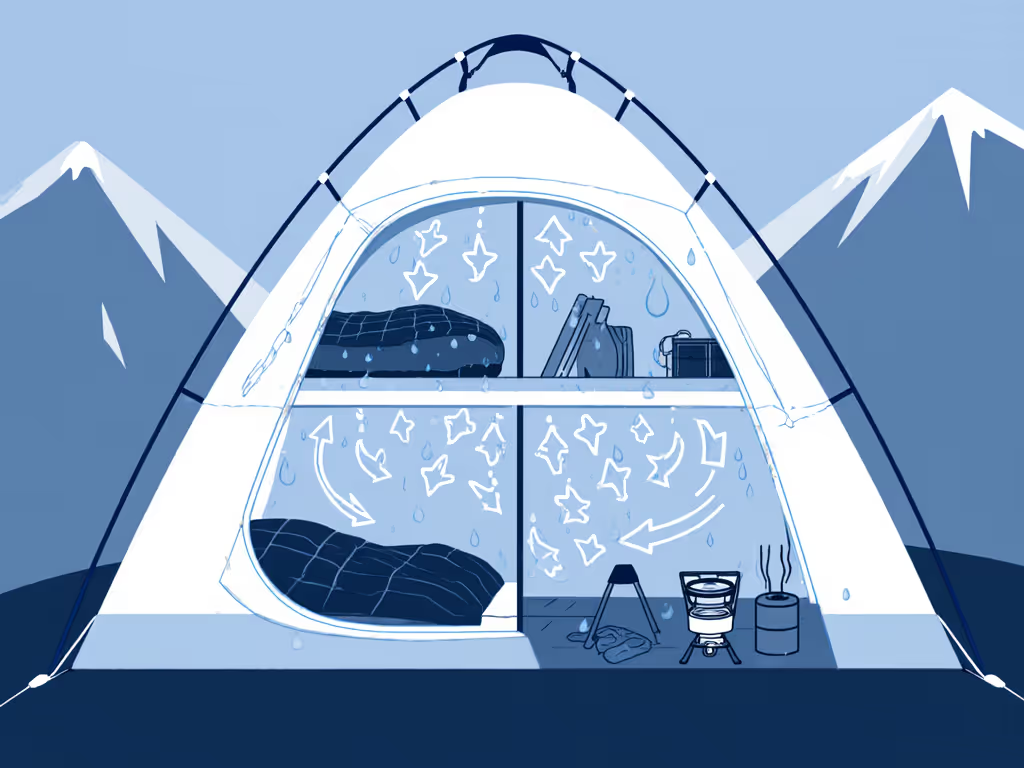
At altitude, nights cool quickly and air dries out overall, but local humidity spikes wherever warm, moist air (from breathing, cooking, or drying clothes) meets cold tent fabric. That interface is where you get:
- Fogging and frost on inner walls
- Drips onto sleeping bags at dawn
- Icy crystals that shower down when the fly is bumped
Physics in short:
- Warm air you exhale carries moisture.
- As it rises and hits cold fabric, moisture condenses or freezes.
- If there is nowhere else for that moisture to go, it accumulates on the walls. Get step-by-step fixes in our condensation control guide.
The fix is not "more waterproofing"; it is controlled airflow:
- Use two-level ventilation: open a low vent (or crack a door on the leeward side) plus a high vent so moist air can rise and escape.
- Avoid fully sealing the tent: closing everything because it is cold almost guarantees heavy condensation.
- Manage wet items: hang only what you must inside. The more damp gear you bring in, the more moisture the tent has to move.
On one shoulder-season loop, I literally chalked where drips formed, then re-mapped where socks, stove, and dog slept so that airflow lanes stayed clear. I keep coming back to that trip whenever people ask why I obsess over vestibule choreography. Evidence before anecdotes - but that small experiment made my mornings boringly dry in weather that should have been a mess.
What is "oxygen-efficient tent ventilation," and should I worry about air supply?
The phrase oxygen-efficient tent ventilation sounds technical, but it is really about balancing three needs:
- Fresh air for safe breathing
- Enough venting to control condensation
- Not over-venting so you freeze in wind and cold
At normal camping altitudes (say 6,000-11,000 ft / 1,800-3,300 m), most modern tents, when used as designed, provide plenty of oxygen. The real risks are:
- Over-sealing the tent during stove use (carbon monoxide, not low oxygen, is the danger).
- Raw wind blasting through open mesh, chilling young kids or low-BMI adults.
Practical guidelines:
- Never cook with a stove inside a fully closed tent. Use the vestibule with the outer door partially open and a high vent cracked.
- Sleep with at least one vent or zipper cracked on the leeward side. You will often feel warmer overall because damp air can escape instead of condensing on your bag.
- In strong wind, create micro-vents: tiny openings at both high and low points rather than one large gap facing the wind.
Your goal is not a sealed capsule - it is a breathable cocoon that quietly exchanges air without turning into a wind tunnel.
How does UV at altitude affect tent fabrics and safety margins?
UV protection at altitude is not cosmetic; it is structural.
As elevation increases, the atmosphere filters less ultraviolet light. A commonly cited rule of thumb is roughly 10-12% more UV per 1,000 m of elevation gain. To choose fabrics that shrug off UV and manage moisture, see silnylon vs silpoly explained. Over seasons, that means:
- Fly fabrics can fade, weaken, and lose tear strength.
- Polyurethane coatings can yellow and flake, reducing waterproofness.
- Mesh can become brittle, especially on sun-facing panels.
To protect your margin of safety:
- Prefer lighter-colored flies for high-sun environments; they stay cooler and degrade slower than very dark ones.
- Rotate your pitch orientation on multi-night trips so the same panel is not always bearing full midday sun.
- Use shade when practical: a nearby tree line or rock wall can cut UV load significantly without trapping moisture, as long as you maintain airflow.
- Retire or relegate sun-fried tents to low-risk backyard duty once fabric shows thinning, tackiness, or easy tearing at stressed points.
This is where buy-once-cry-once fabric choices pay off. Tougher weaves and better coatings are not just marketing - they keep your wind and rain protection intact after years of high-sun trips.
Do I need a different setup routine for high-elevation wind and storms?
Yes - and the routine matters as much as the tent model.
1. Site selection:
- Favor wind-sheltered micro-sites: behind low ridges, brush, or boulders, not on the scenic, exposed knoll.
- Stay out of dry gullies or obvious water channels that can become flash-flood paths.
2. Pitch orientation:
- Aim the narrow end or strongest pole section into the prevailing wind.
- Keep large, flat fly panels out of the direct wind if you can.
3. Anchors and guylines:
- At altitude, soil is often rocky or thin. Carry a mix of stake types and learn deadman anchors with rocks or buried stakes.
- Guy out all structural points (not just the corners): mid-panel guyouts drastically cut flapping and noise.
4. Interior workflow:
- Give each person and the dog a lane: one for exits, one for wet gear, one for sleep.
- Keep cooking and water prep in the vestibule, not weaving over sleeping bags.
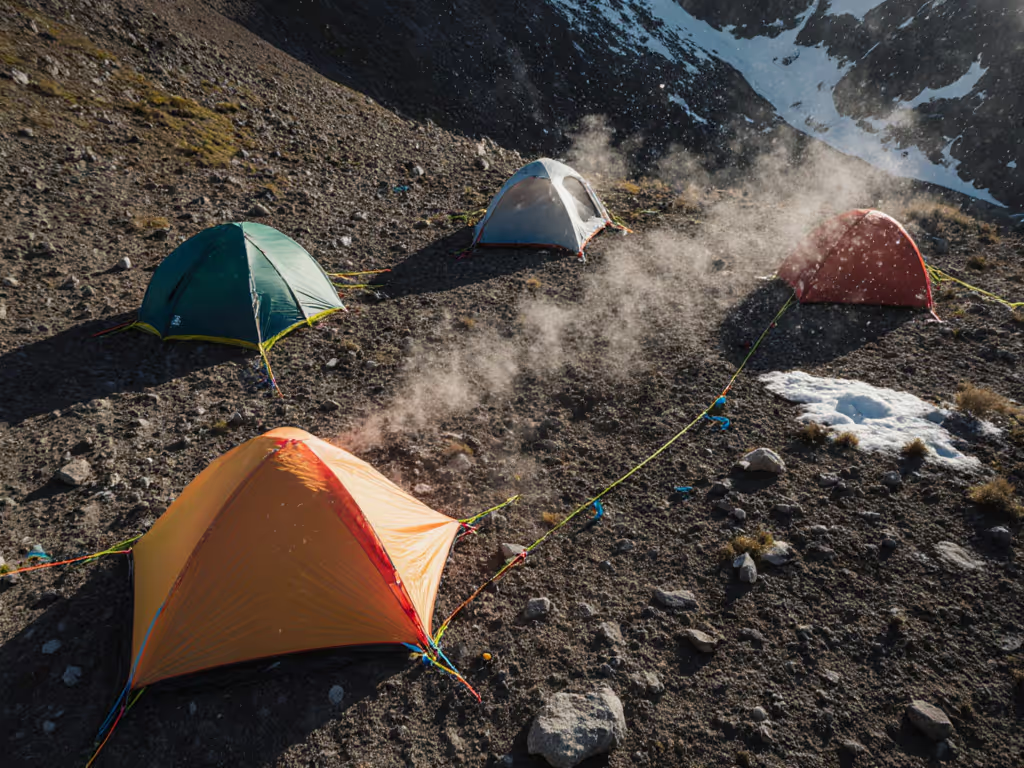
These are the small, repeatable behaviors that turn frazzled "hold the pole!" evenings into quiet, predictable setups.
How can I stress-test my tent at home before taking it high?
A simple pre-trip protocol builds confidence:
- Cold-night condensation test
- Pitch on a cool, humid evening.
- Sleep with all normal occupants (including the dog) and your usual vent settings.
- In the morning, map where walls are wet, where bags touched fabric, and where drips formed. Adjust pad positions, head/foot orientation, and vent use.
- Wind & anchor rehearsal
- On a breezy day, practice a timed pitch: how long from packed to guyed-out, with everyone doing their job.
- Test alternative stake placements for rocky soil: use rocks, buried stakes, and backup guyline configurations.
- Dark and bad-weather drill
- Once, pitch the tent in the dark with headlamps.
- Once, simulate rain: set up under a sprinkler or during a light shower.
- Note any confusing steps; simplify by color-coding poles, marking head/foot ends, and packing stakes and guylines in a dedicated pouch.
These rehearsals let you work from a playbook, not improvisation, when the real weather hits higher up.
What are realistic altitude limits for a "normal" family tent?
There is not a strict altitude line where a 3-season tent fails; the real limits are weather exposure, wind, and snow load.
For most families and partner teams:
- A quality 3-season tent with a full fly, good pole architecture, and thoughtful venting can handle 6,000-10,000 ft (1,800-3,000 m) camps in shoulder-season conditions - provided:
- Wind is moderate (not full alpine storms)
- Snow, if any, is light and short-lived
- You have appropriate sleeping pads and bags
Upgrade toward a more storm-capable or "4-season-leaning" tent when: If your trips push into true winter or sustained alpine wind, start with our best 4-season tents shortlist.
- You expect sustained high winds, wind-slab snow, or heavy graupel.
- Tree cover disappears and camps are on open ridges or moraines.
- You need redundancy for kids or risk-averse partners who are not okay with "we will just ride it out and see."
As always, note the confounders: a sheltered 10,000 ft basin on a calm night can feel gentler than a 7,000 ft pass in a frontal wind event.
Where should I go from here?
If you are moving your trips higher, treat your tent and routines as a testable system:
- Log conditions after each trip: altitude, wind, temps, and how the tent felt - drafty, drippy, quiet, cramped.
- Adjust one variable at a time on each outing: vent settings, pad layout, or pitch orientation.
- Capture what works with quick sketches or photos so you can repeat it, not reinvent it.
Evidence before anecdotes. Over a handful of weekends, you will build a personal playbook for high-altitude tent performance - a mix of mountain camping tent science and your family's own preferences.
From there, you are not just hoping a tent will keep you comfortable. You are running a small, reliable system that makes thin-air mornings feel ordinary and generous rather than risky.
And that is the real goal: not heroic survival stories, but a string of unremarkably good nights where everyone, including the dog, wakes up ready for the day.
Related Articles